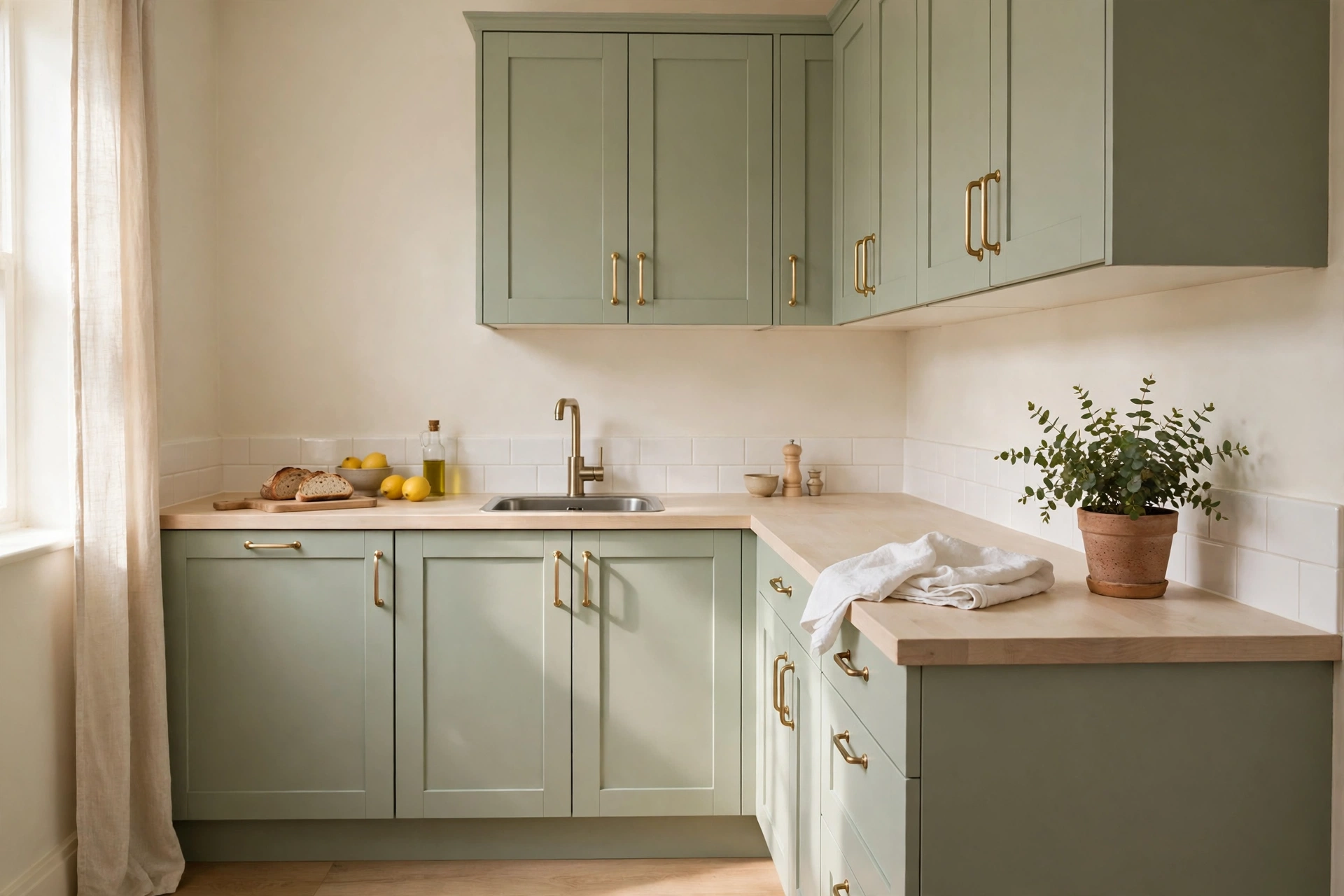
These small kitchen cabinet colors turn a plain cooking room into a bright, polished space where every door and drawer feels fresh and planned. Start by noting your floor tone, counter material, and wall shade, so each paint choice sits well with what is already in the room. Pale shades open a tight corner, warm tones add comfort, and one bold door colour can anchor the whole cooking zone without crowding it. Test a painted board in morning and evening light, since a shade that looks soft at noon can read darker at night. Small rooms suit calm, clean colours, simple hardware, and one warm accent rather than a full loud palette. Pick one idea from this list, try it on one run of doors first, and notice how fresh colour changes cooking, cleaning, and the whole mood of the room.
1. Soft Sage Cabinet Paint
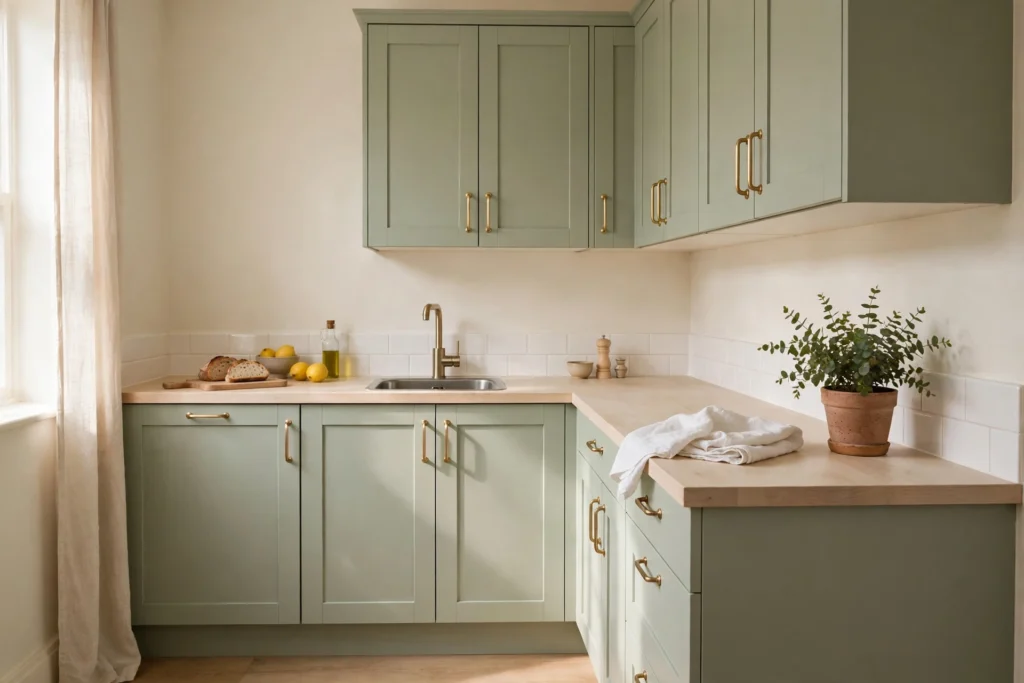
A soft sage coat turns plain doors into a calm garden backdrop that suits almost any counter material. Gentle green adds quiet freshness, pale hardware keeps the look light, and the muted tone gives a small room a finished, restful feel.
Keep the paint one shade, match knobs to the lightest trim, and leave a small gap of pale wall above the doors. The result feels open and clean, and it works in rented homes when doors are painted as removable panels with care.
2. Warm Cream Cabinet Finish
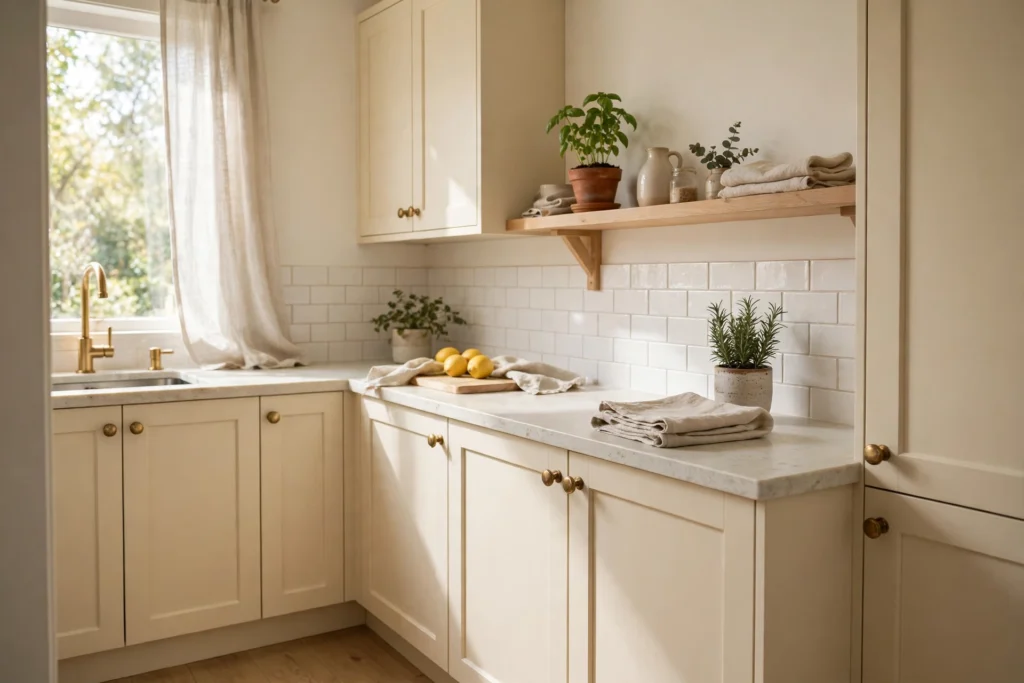
- A cream finish bounces light across a tight cooking corner.
- Warm cream suits pale wood and soft stone well.
- One cream shade keeps the room calm and tidy.
- Sealed paint wipes clean after busy cooking days.
A warm cream finish suits compact rooms because it adds glow without bold colour or busy pattern. It softens dark corners, pairs well with wood and stone, and makes a small cooking corner feel welcoming rather than plain.
3. Deep Navy Cabinet Doors
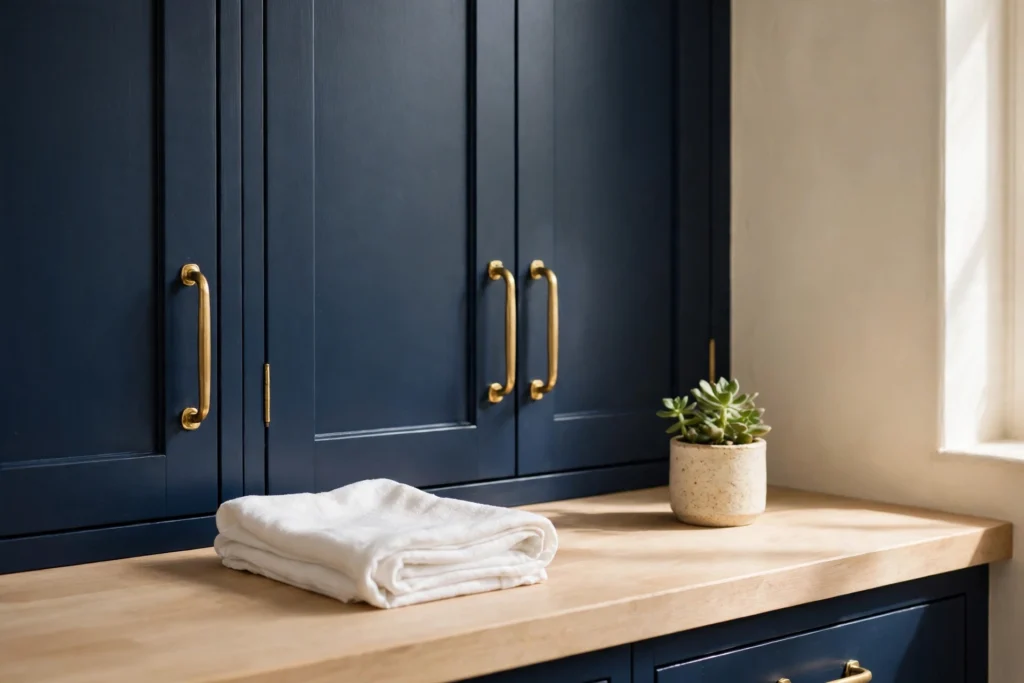
Quick Tip: Paint one navy run first and live with it for a week, so the bold shade settles in and the small room keeps a balanced, planned look.
A navy door ends the flat pale room look for good. It adds depth, frames pale counters nicely, and makes a compact kitchen feel designed rather than finished in a hurry.
4. Pale Grey Cabinet Tone
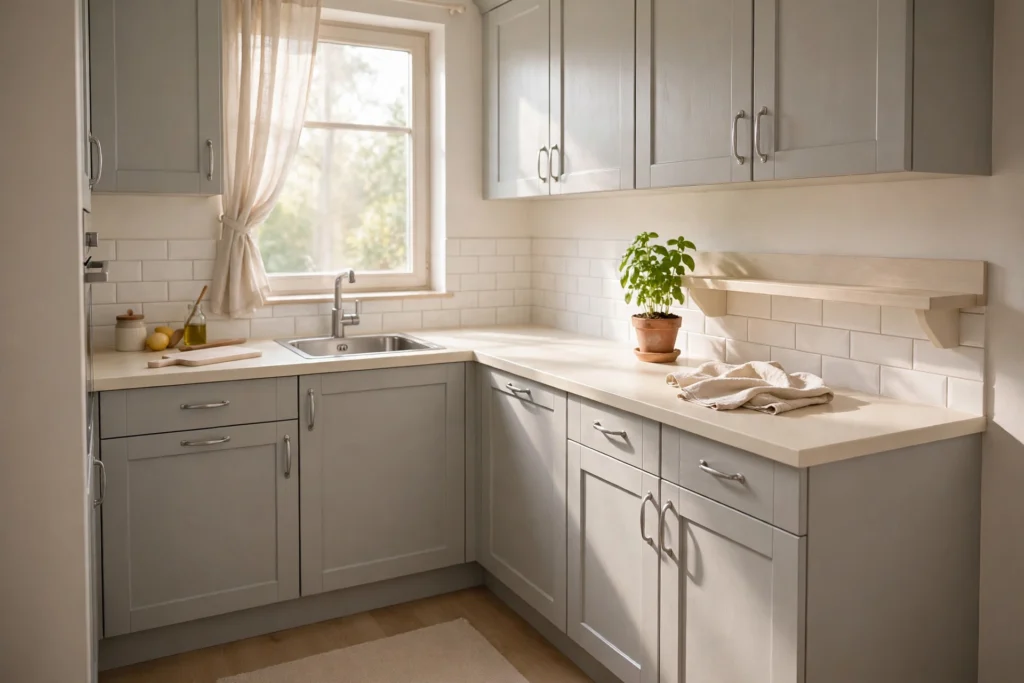
Before: The cooking room stayed bare and white, so the space felt flat and unfinished. Nothing drew the eye for long, and evening cooking felt dull.
After: Pale grey now gives the doors soft depth, freeing the walls from plain white and giving cooking a calm start. Mornings feel fresher, and the room looks finished rather than plain.
A pale grey tone suits compact rooms because it adds shade without dark weight. Choose a cool grey with warm undertones, seal it against splashes, and wipe it weekly so it stays fresh.
5. Classic White Cabinet Shine
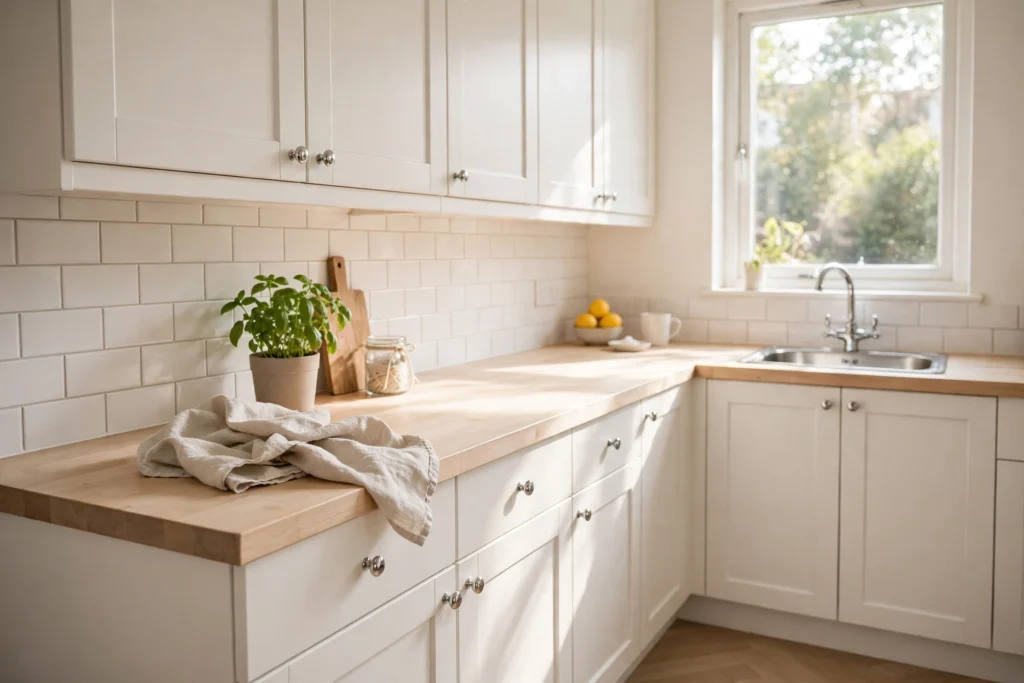
- Measure the door fronts before buying any paint.
- Clean and sand each door lightly first.
- Prime in thin coats for a smooth base.
- Seal the finish once it dries fully.
A classic white shine gives a compact room a bright start to cooking. It bounces light around the room, pairs with any counter, and turns plain doors into a fresh, useful backdrop.
6. Warm Walnut Cabinet Stain
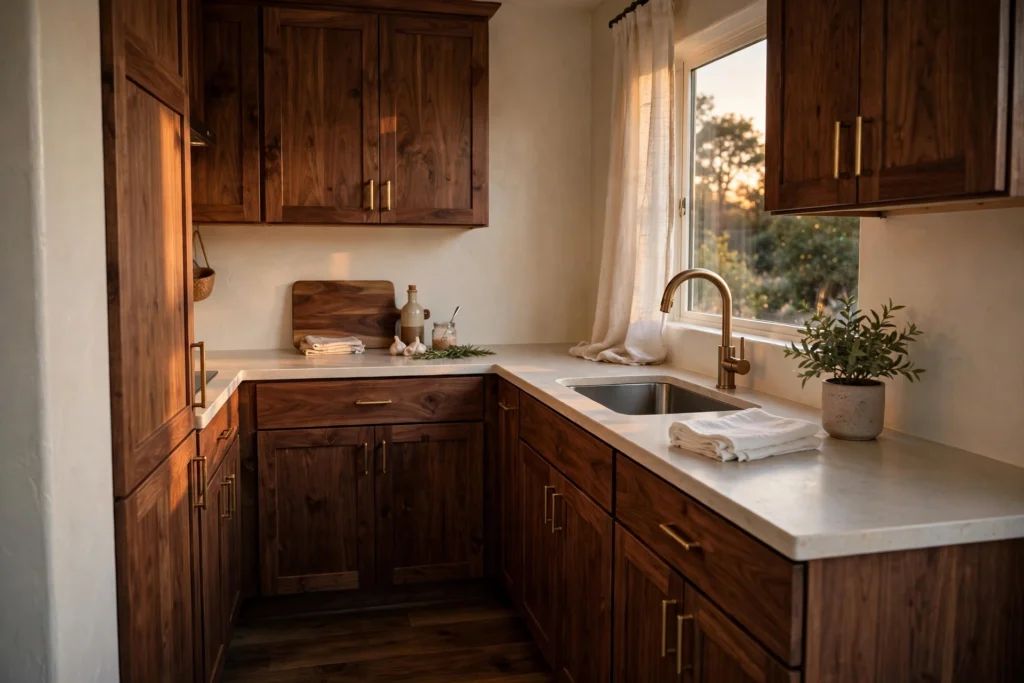
| Feature | Warm Walnut Cabinet Stain | Plain Painted Doors |
|---|---|---|
| Daily feel | Calm and ready | Rushed and messy |
| Door interest | Grain draws the eye | Doors look flat |
| Cleaning effort | Wipes clean quickly | Similar effort |
| Best for compact rooms | Easy to style | Needs more order |
A walnut stain marks one cooking zone for warm style in a single glance. It keeps the wood lively yet soft, pairs well with cream walls and pale counters, and gives a small room a collected feel.
7. Soft Blush Cabinet Accent
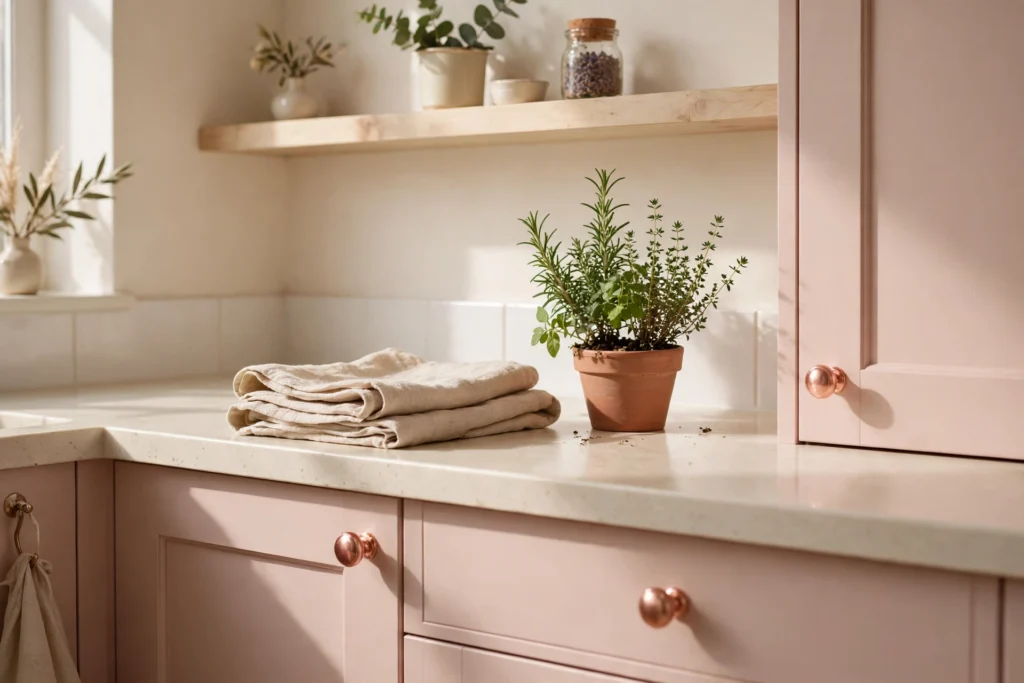
Do:
- Keep the blush shade pale so the room stays bright.
- Match blush doors to cream counters only.
- Wipe the doors weekly so colour stays fresh.
- Leave gaps at corners for clean joins.
Don’t:
- Mix blush with bold red on one run.
- Paint every wall blush as well.
- Leave blush doors dusty without wiping them clean.
- Overload the room with too many pink items.
A blush accent beats a plain white door when a corner feels cold, because a soft pink tone warms the cooking zone. It keeps the room gentle, speeds up styling choices, and leaves the main walls free for pale tones.
8. Charcoal Black Cabinet Look
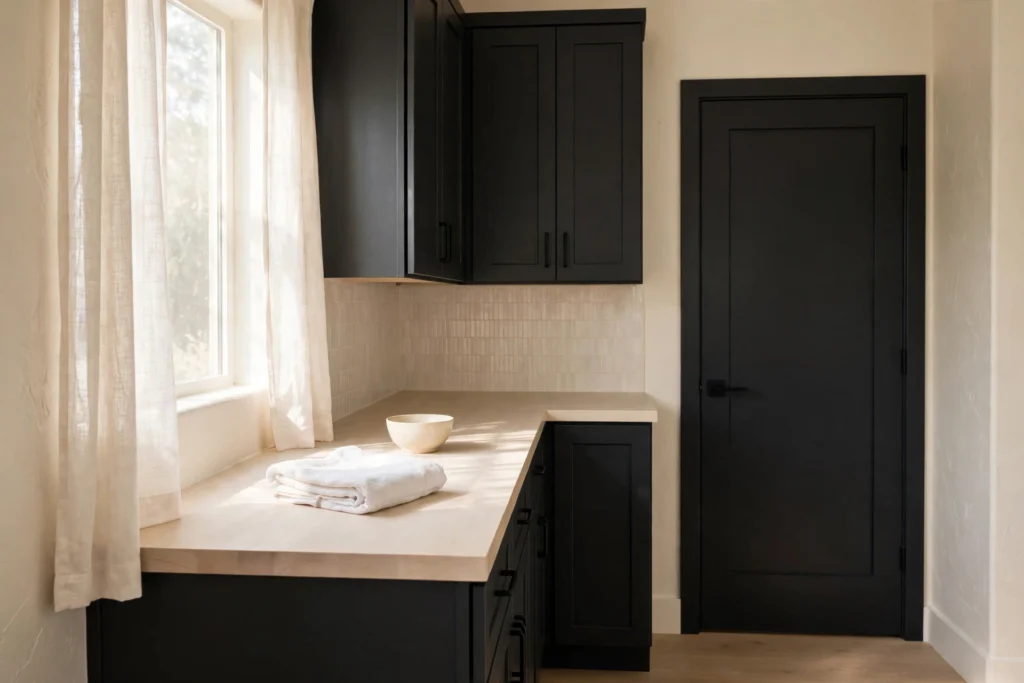
Cost: Medium, depending on paint size and primer quality.
Time: Under two days for painting and sealing.
Skill Level: Beginner friendly, with basic tools needed.
Best For: Home cooks who want a bold room daily.
A charcoal door brings drama to a plain cooking room without new cabinets. Dark doors in a tidy run sit in one neat line, flatter cream walls, and give a compact room a collected, modern feel today.
9. Pale Mint Cabinet Wash
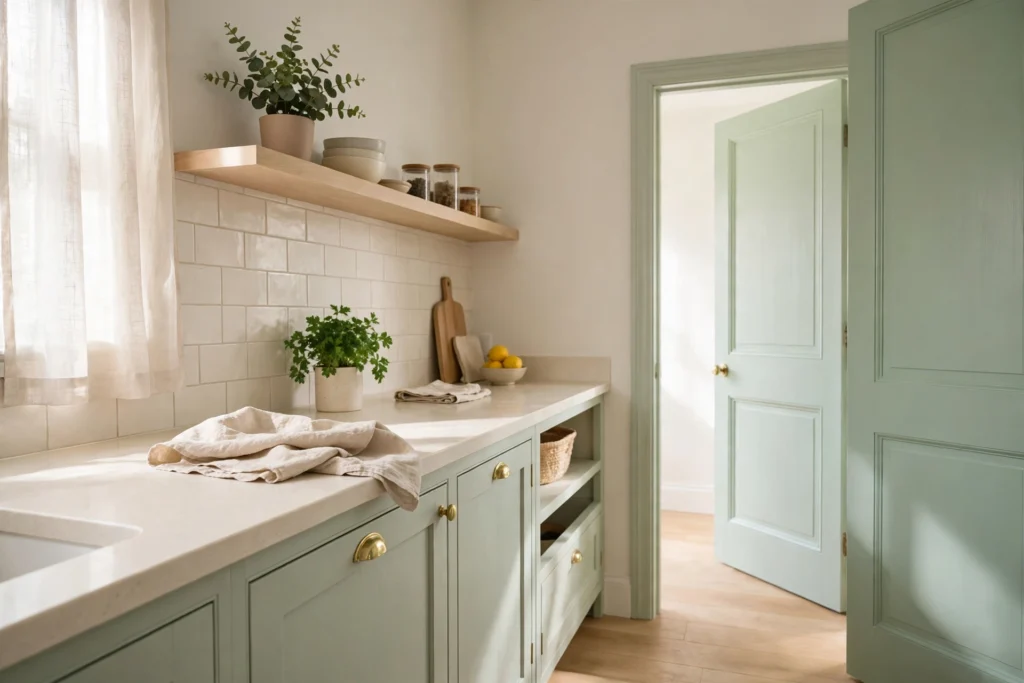
A pale mint wash turns a plain door run into a cool, airy backdrop that suits almost any wall shade. Soft mint adds gentle freshness, pale knobs keep the look light, and the washed tone gives a small room a finished, breezy feel.
Keep the wash one shade, seal it against steam, and leave space at the door ends for pale trim. The result feels open and calm, and it works in small homes when the mint stays pale and light.
10. Rich Espresso Cabinet Hue
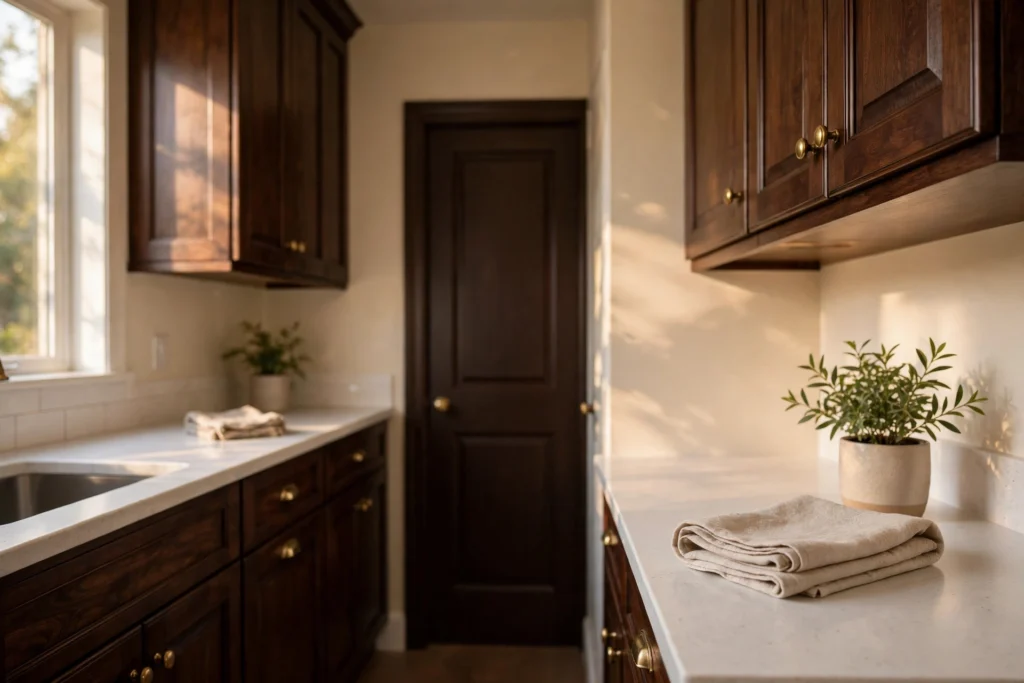
- An espresso hue grounds a pale room in one place.
- Dark brown suits cream walls and pale wood.
- One stain shade keeps the room calm and tidy.
- Sealed doors resist steam on busy days.
An espresso hue suits compact rooms because it adds richness while keeping the rest of the room calm. It gives the cooking zone a clear anchor, frees shelves from extra decor, and makes a small kitchen feel special rather than plain.
11. Buttery Yellow Cabinet Glow
Quick Tip: Keep yellow doors in one soft shade, so the sunny tone stays gentle and the compact room gains a warm, cheerful detail.
A buttery yellow door turns a plain cooking corner into bonus warmth and order. It lifts dark corners, frees the wall from flat white, and makes a compact room feel collected in the best, lived in sense.
12. Dusty Blue Cabinet Shade
Before: The door run stayed plain and white, so cooking felt flat and the room looked unfinished. Nothing caught the light for long, and the doors felt plain.
After: Dusty blue now softens the whole corner, freeing the shelf and giving cooking a calm start. Evenings feel cooler, and the room looks finished rather than plain.
A dusty blue shade suits compact rooms because it adds colour and calm at once. Choose a muted blue that suits the room size, seal it against steam, and wipe it weekly so it stays bright.
13. Olive Green Cabinet Finish
- Measure the door fronts before buying any paint.
- Test the olive shade on one door first.
- Fix the doors flat after painting.
- Seal and polish for splash protection.
An olive finish gives a compact room a grounded start to cooking. It adds quiet nature, suits cream counters well, and turns plain doors into a friendly, useful backdrop.
14. Terracotta Cabinet Warmth
| Feature | Terracotta Cabinet Warmth | Plain White Doors |
|---|---|---|
| Daily feel | Calm and ready | Rushed and messy |
| Door warmth | Terracotta softens the room | Doors look flat |
| Cleaning effort | Wipes clean quickly | Similar effort |
| Best for compact rooms | Easy to style | Needs more order |
A terracotta door marks one cooking zone for earthy warmth in a single glance. It keeps the room soft and readable, frees the shelf from extra decor, and pairs well with cream walls, pale wood, and small green plants.
15. Frosted Glass Cabinet Fronts
Do:
- Keep the glass fronts clean so dishes stay soft behind them.
- Pair frosted glass with pale frames only.
- Wipe the glass weekly so shine stays fresh.
- Leave gaps between doors for neat joins.
Don’t:
- Run frosted glass across a full long wall.
- Mix busy door colours on one small run.
- Leave glass dusty without wiping it clean.
- Overload the doors with too many dark items.
A frosted glass front beats a plain solid door when a corner feels heavy, because soft glass lightens the cooking zone. It keeps storage calm, speeds up cleaning, and leaves the main run free for solid doors.
16. Two Tone Cabinet Pairing
Cost: Medium, depending on paint size and finish quality.
Time: Under two days for painting and sealing.
Skill Level: Beginner friendly, with basic tools needed.
Best For: Home cooks who want a layered look daily.
A two tone pairing brings balance to a plain cooking room without new cabinets. Pale uppers and dark lowers in a tidy run sit in one neat line, flatter cream walls, and give a compact room a collected, modern feel today.
17. Soft Taupe Cabinet Colour
A soft taupe coat turns plain doors into a warm neutral backdrop that suits almost any counter material. Gentle taupe adds quiet depth, pale hardware keeps the look light, and the muted tone gives a small room a finished, calm feel.
Keep the paint one shade, match handles to the lightest trim, and leave a small gap of pale wall above the doors. The result feels open and clean, and it works in rented homes when doors are painted with care and sealed well.
18. Bold Teal Cabinet Statement
- A teal door keeps colour steady in one place.
- Bold teal suits cream walls and pale wood.
- One teal shade keeps the room calm and tidy.
- Sealed paint resists stains on busy days.
A bold teal door suits compact rooms because it adds personality while keeping the rest of the room calm. It gives the cooking zone a clear identity, frees shelves from extra decor, and makes a small kitchen feel special rather than plain.
19. Warm Honey Cabinet Tone
Quick Tip: Place daily cooking tools away from the honey doors, so the warm wood stays clear and the compact room gains a clean, golden detail.
A honey tone turns a plain cooking corner into bonus warmth and order. It keeps wood tones crisp and tidy, frees the wall from flat paint, and makes a compact room feel collected in the best, lived in sense.
20. Pale Lavender Cabinet Touch
Before: Doors sat loose in mixed shades, so the room looked patchy and finding a calm focal point took far too long. Nothing felt ready, and prep always felt rushed.
After: Pale lavender now sits in neat rows, freeing the shelf and giving cooking a calm start. Mornings take less time, and the room looks finished rather than plain.
A lavender touch suits compact rooms because it gathers soft colour in one place. Choose a pale shade near the window zone, keep hardware one pale tone, and wipe it weekly so it stays fresh.
Conclusion:
A calm, polished cooking room does not need a large budget or a long building project, only thoughtful choices that suit your daily life. Pick one idea from this list, try it on one door run this weekend, and notice how soft sage, warm cream, and deep navy change your mornings. Save this guide on Pinterest for your next refresh, share it with a friend who loves small homes, and keep shaping a small kitchen cabinet colors collection that feels yours, door by door, day by day. Start small, keep what you love, and let each change bring more comfort, calm, and joy to your home every day.