Introduction:
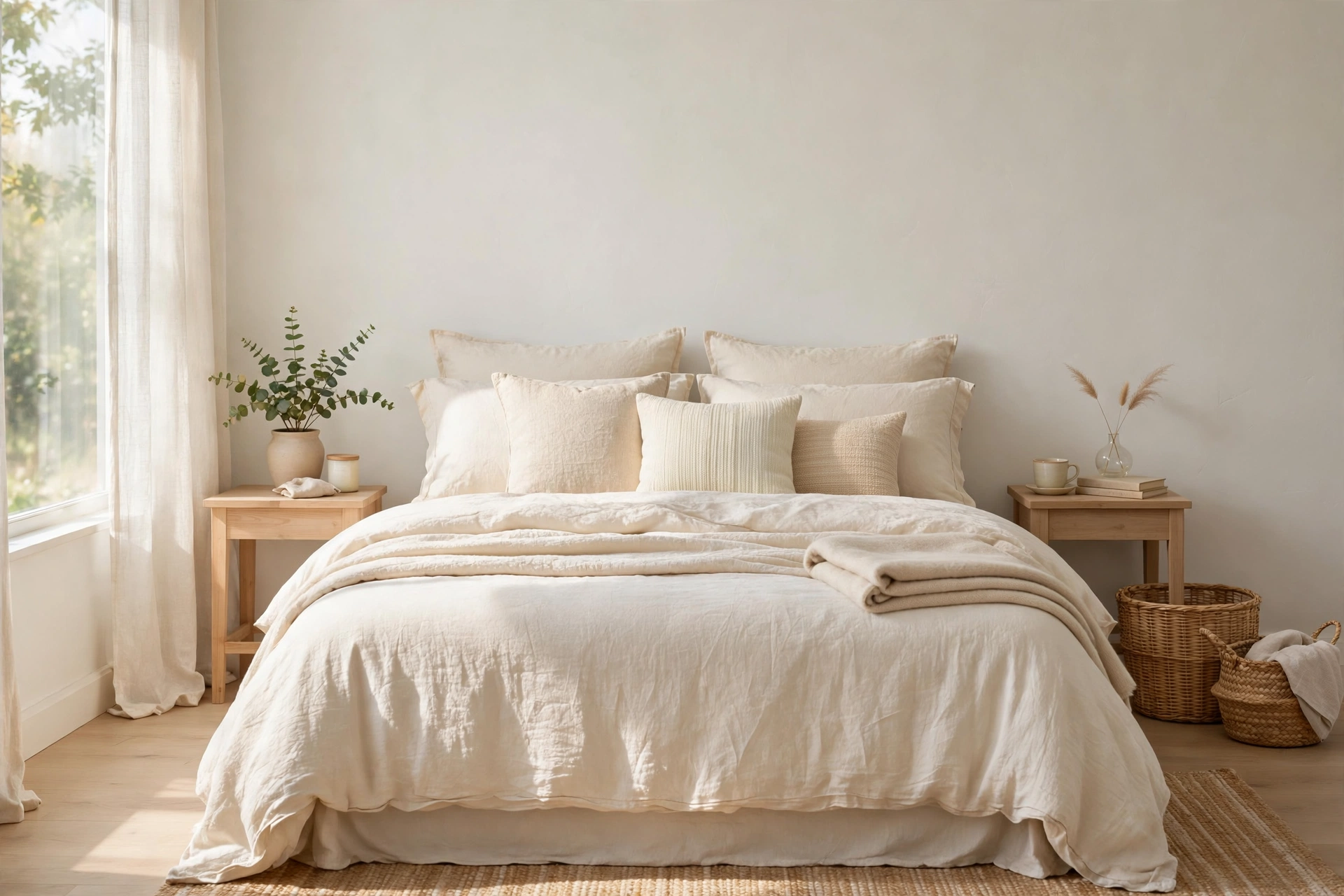
A small bedroom furniture layout can still feel spacious, calm, and welcoming when each piece earns a clear spot. Start by looking at the bed, the window, and the door swing already in place, then choose one easy change to test for a week before moving another piece. Pale bedding, warm lamps, and tidy baskets can lift a plain room quickly, while a clear walking path can make mornings smoother and evenings calmer. Keep colours pale, keep surfaces clear, and keep only furniture that serves daily life well. A calm room suits one plant, one soft throw, and one open shelf rather than a crowded display. Try one idea from this list, notice how the room feels at night, and build slowly from there.
1. Bed Centred On Feature Wall
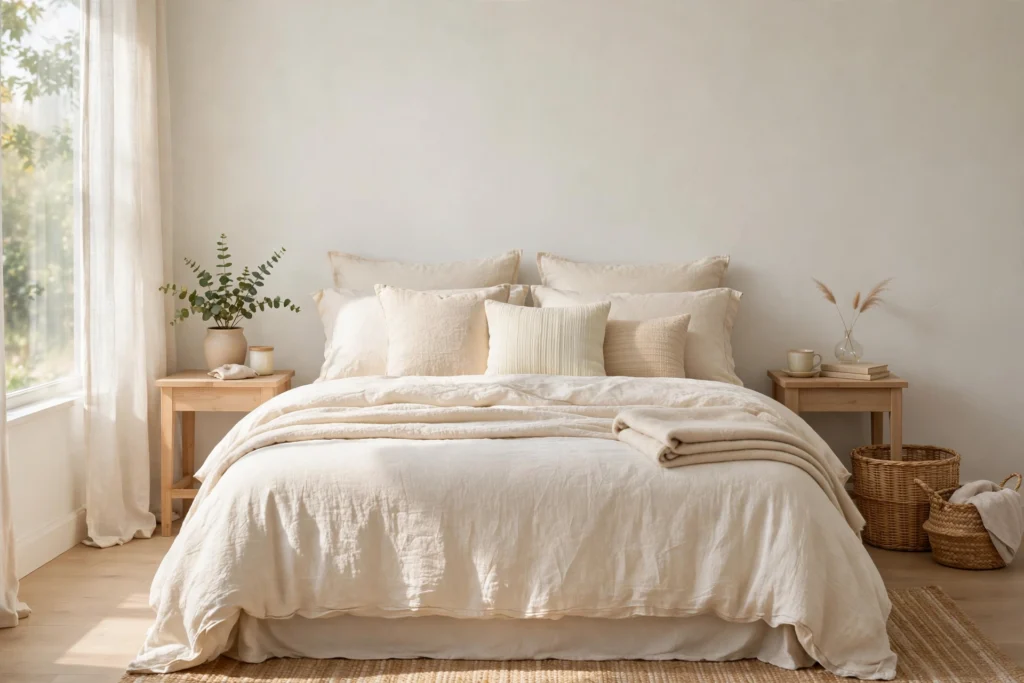
A centred bed gives a small room a calm anchor at once. The wall becomes a clear focal point, the bedding looks intentional, and both sides gain equal space for lamps, books, and quiet evening routines.
Keep the headboard low, centre the bed with care, and leave a clear gap on each side. The result feels balanced, open, and ready for rest at any hour.
2. Diagonal Bed Corner Angle
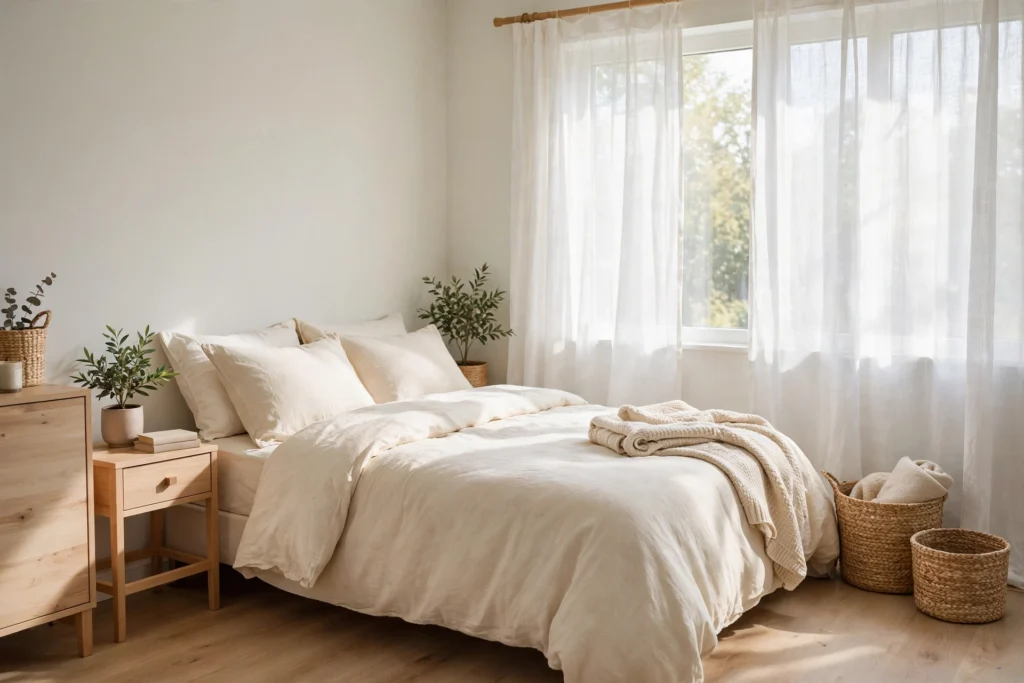
A diagonal bed gives a tight corner a surprising sense of space.
- Angle the headboard slightly away from the wall.
- Leave a clear gap for curtains to move freely.
- Keep one nightstand on the open side.
- Test the new angle for one night before settling.
An angled bed suits small rooms because the eye travels further, the floor feels less boxed in, and the corner gains a soft, welcoming shape.
3. Floating Nightstand Wall Pair
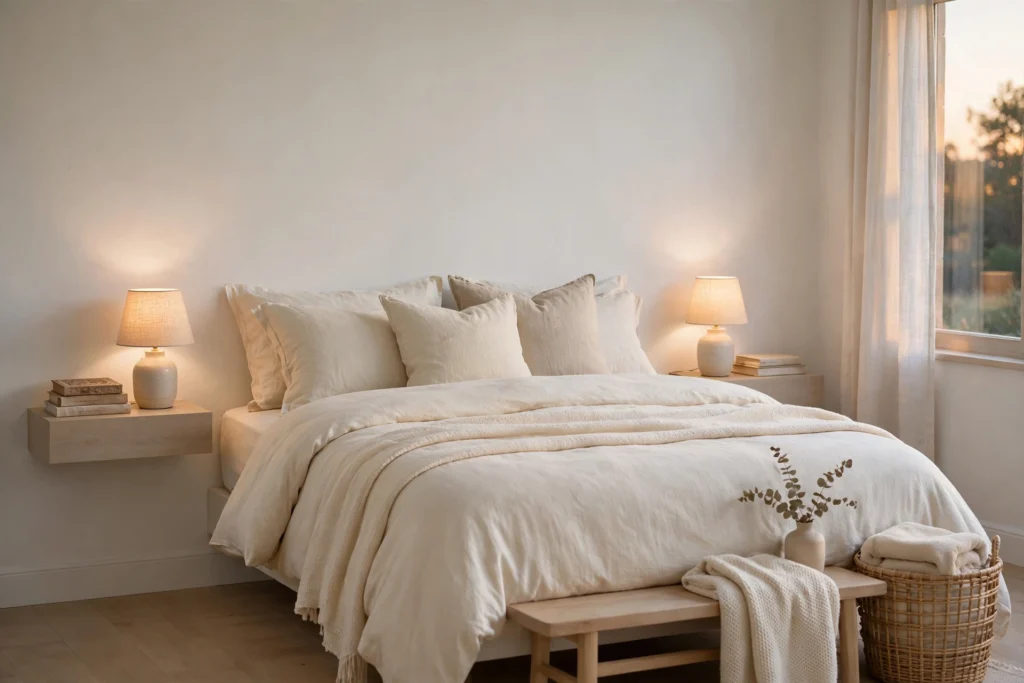
Quick Tip: Fix both nightstands at the same height first, then return only a lamp, one book, and one small tray to each surface.
Floating nightstands suit a small room because they free the floor, keep the bedside tidy, and stop clutter from spreading to the bed. Choose matching lamps if possible, wipe surfaces weekly, and keep cables tucked neatly behind each unit.
4. Wardrobe Flanking Window Pair
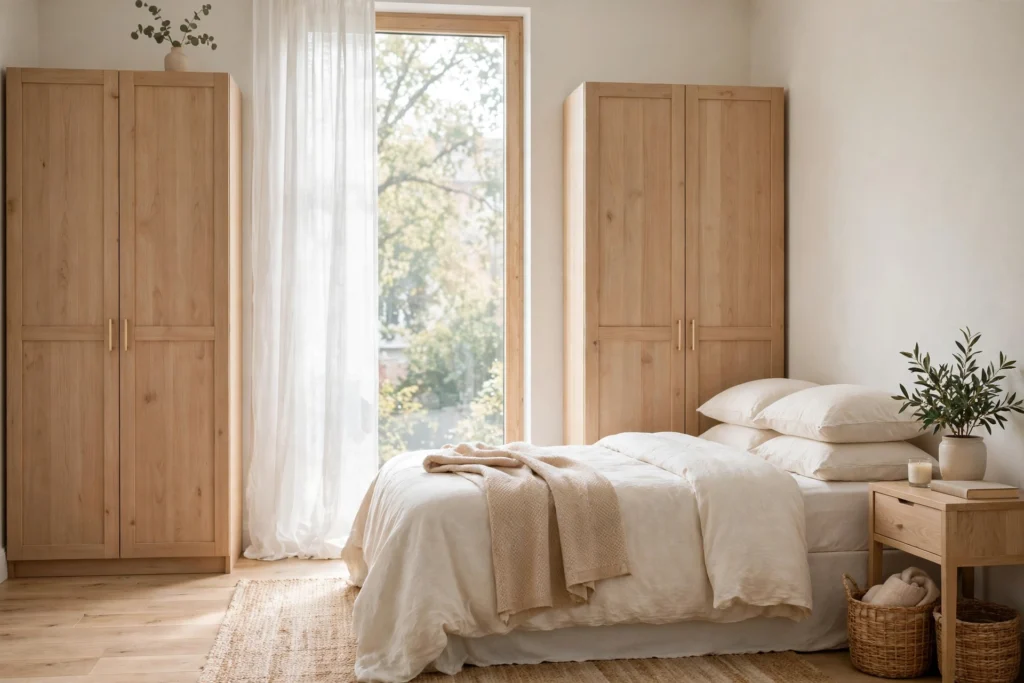
Before: a bare window wall felt plain and unused, so mornings felt flat and storage felt scattered. Nothing gave the window a clear frame for long, and dressing felt rushed.
After: twin wardrobes now frame the window neatly, giving the wall a calm purpose at once. Mornings feel brighter, and the room looks finished rather than plain.
Flanking wardrobes suit small rooms because they add storage without blocking light. Keep doors in one pale tone, fold clothes neatly inside, and leave the window clear so daylight reaches the bed.
5. Dresser Opposite Bed Wall
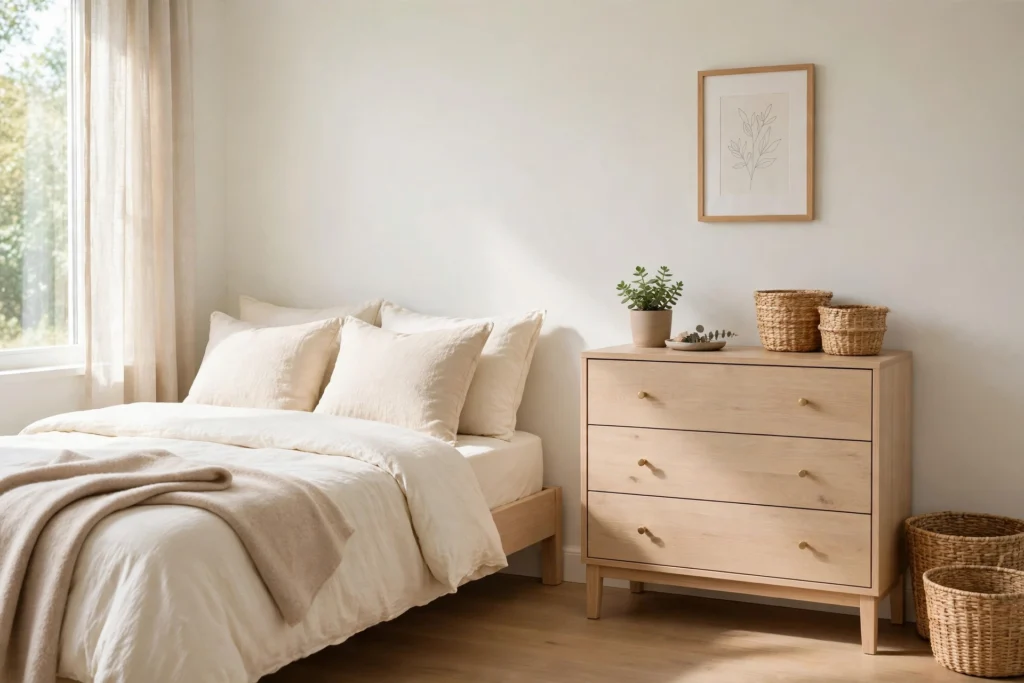
A dresser opposite the bed gives a small room a clear storage wall exactly when it matters.
- Measure the wall before choosing a dresser.
- Keep the dresser in one pale shade.
- Centre it facing the bed.
- Leave a clear walking path beside it.
Opposite dressers suit small rooms because they balance the bed, keep clothes within reach, and need no extra floor space. Keep a small plant nearby, avoid bulky tops, and the pale dresser turns a plain wall into a calmer feature.
6. Desk Facing Window Light
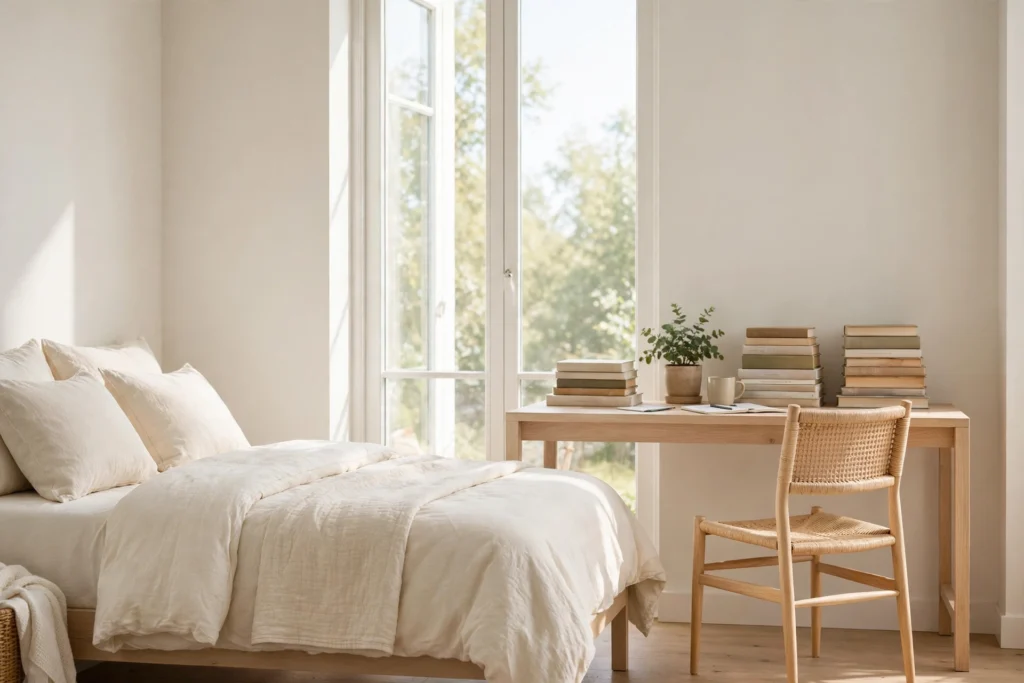
A desk facing window light turns a plain wall into a bright work spot.
| Feature | Desk Facing Window Light | Desk Facing Blank Wall |
|---|---|---|
| Daily feel | Bright and focused | Flat and dull |
| Morning light | Soft and clear | Low and grey |
| Cleaning effort | Wipes clean easily | Similar effort |
| Best for small rooms | Easy to enjoy | Needs more order |
Window desks mark one corner as a work spot in a single glance. They bring daylight to study time, pair well with cream bedding and pale wood, and keep the rest of the room free for rest.
7. Bench At Bed Foot
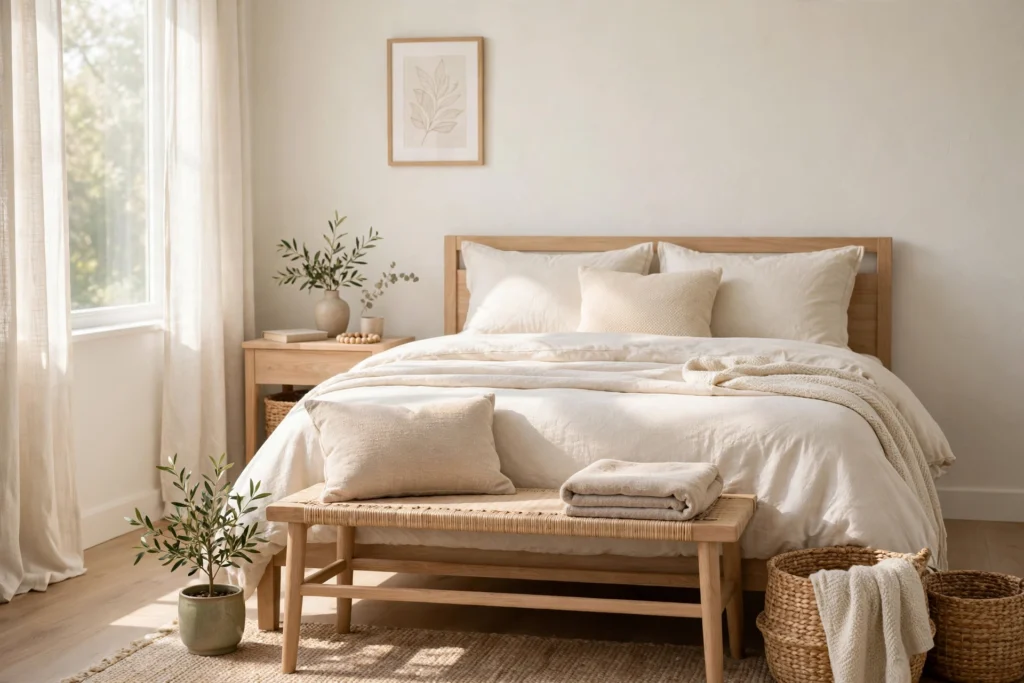
A bench at the bed foot frames a small room with calm, inviting order.
Do:
- Keep bench tones in one pale range so the room stays calm.
- Fold a throw neatly across the cushion.
- Match timber to pale bedding nearby.
- Leave gaps at bed edges for clean lines.
Don’t: - Mix busy bench patterns in one small room.
- Crowd the foot of the bed with heavy items.
- Leave the bench covered in stray clothes.
- Block walking paths with a long bench.
Foot benches beat a bare bed end when a room feels unfinished, because soft seating adds purpose neatly. They keep mornings calm, speed up dressing routines, and leave the floor free for walking.
8. Tall Bookcase Narrow Corner
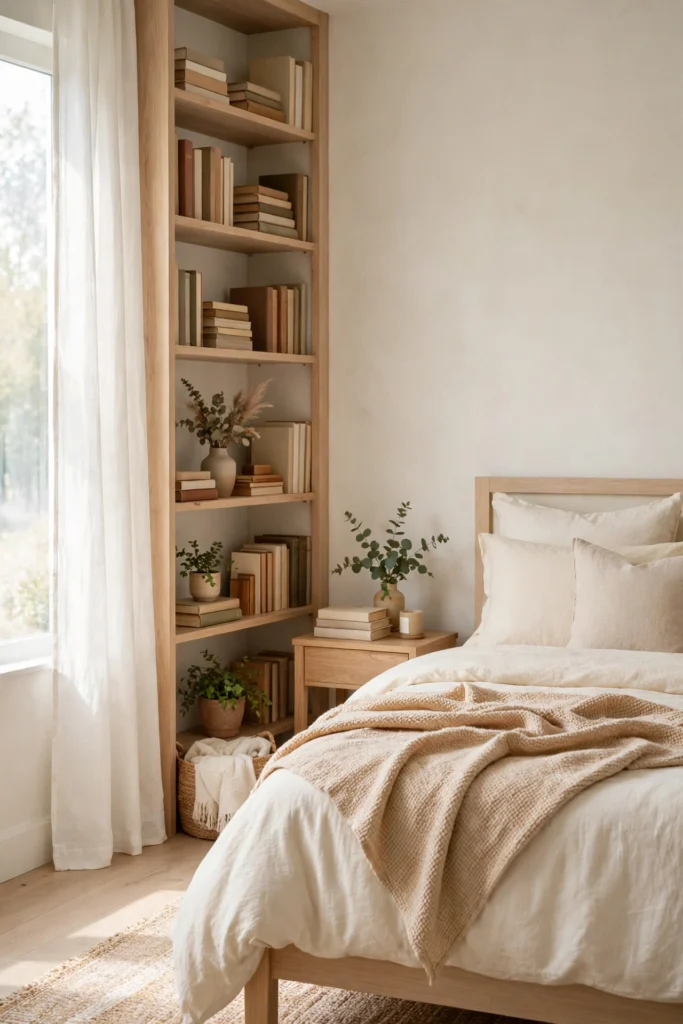
A tall bookcase brings gentle order to a plain corner without new furniture. Slim shelves in a neat row rise under soft light, flatter cream walls, and give a small room a collected, homely feel today.
Cost: Low, depending on shelf size and timber quality.
Time: Under one day for fixing and styling.
Skill Level: Beginner friendly, with basic tools needed.
Best For: Readers who want tidy book storage daily.
9. Vanity Beside Wardrobe Wall
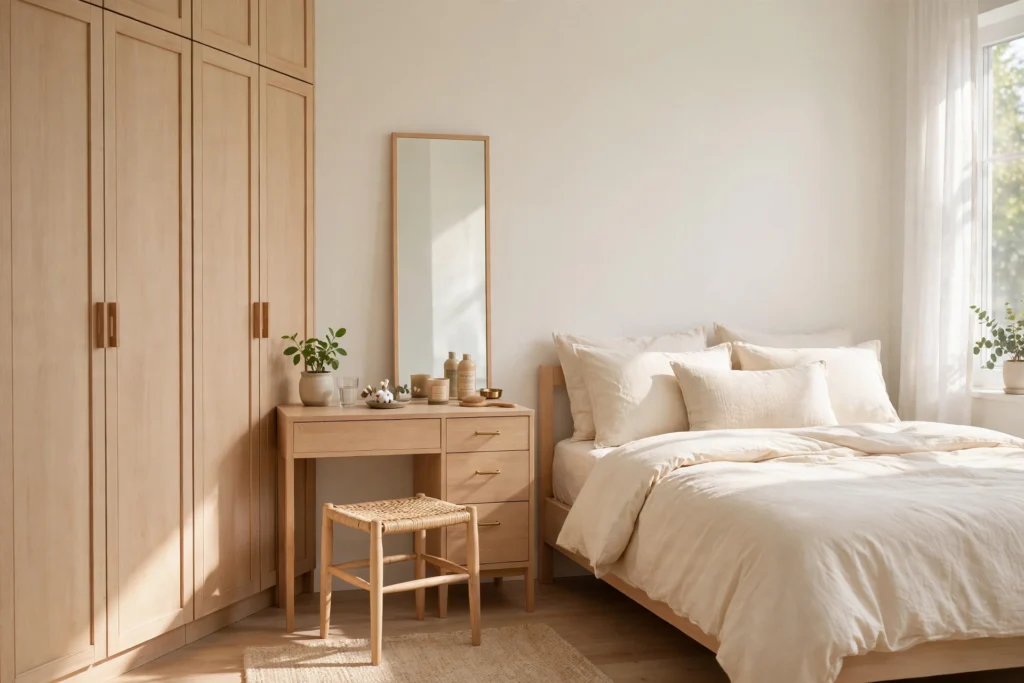
A vanity beside the wardrobe gives a plain wall a useful morning spot at once. One mirror, one stool, and one tray can turn a bare stretch into a steady place to get ready without new furniture or a larger room.
Keep the vanity surface clear, store small items in one tray, and sit facing daylight when possible. The result feels calm, tidy, and ready for a gentle start each morning.
10. Chest Between Twin Windows
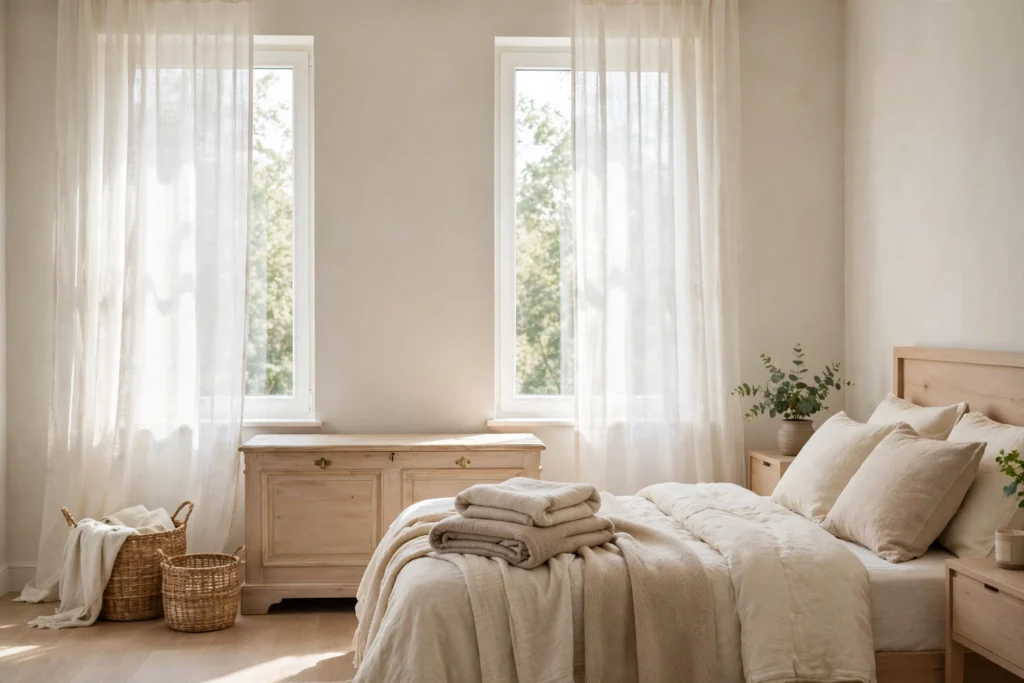
A chest between windows gives a small room a shared storage centre at once.
- Choose a chest that fits the gap exactly.
- Keep blankets folded neatly inside.
- Add one small plant on top only.
- Leave curtains free to move each day.
A central chest suits small rooms because bedding stays close, windows stay bright, and the wall gains a tidy, balanced shape.
11. Reading Chair By Window
Quick Tip: Place the chair beside the window first, then add one small lamp and one book stack so reading feels easy from the first evening.
Reading chairs suit a small room because they add a rest spot without blocking light. Choose a chair in one soft tone, keep the cushion plump, and wipe the frame weekly so the corner stays inviting.
12. Wardrobe Wall Full Length
Before: scattered storage made mornings feel rushed and untidy. Nothing gave clothes a single home for long, and dressing felt like a chore.
After: a full length wardrobe wall now holds everything neatly, giving mornings a calm start at once. The room looks finished rather than plain, and dressing feels easy.
Full length wardrobes suit small rooms because they use one wall fully. Keep doors in one pale tone, fold clothes weekly, and leave one shelf clear so the wall never feels crowded.
13. Bedside Caddy Wall Mount
A wall mounted caddy gives a plain bedside one extra tidy spot exactly when it matters.
- Fix the caddy at arm height first.
- Keep pockets in one pale shade.
- Place one book inside only.
- Clear small items weekly to keep it neat.
Wall caddies suit small rooms because they replace a bulky table in minutes and need little care. Keep a small plant nearby, avoid heavy loads, and the neat caddy turns a plain wall into a calmer feature.
14. Mirror Leaning Dresser Side
A leaning mirror turns a plain dresser into a bright dressing spot.
| Feature | Mirror Leaning Dresser Side | Bare Dresser Wall |
|---|---|---|
| Daily feel | Bright and open | Flat and dull |
| Morning light | Soft and clear | Low and grey |
| Cleaning effort | Wipes clean easily | Similar effort |
| Best for small rooms | Easy to place | Needs more order |
Leaning mirrors mark one dresser as cared for in a single glance. They bounce daylight across the room, pair well with cream bedding and pale wood, and need no wall fixing at all.
15. Daybed Against Side Wall
A daybed against the side wall frames a small room with calm, inviting order.
Do:
- Keep cushion tones in one pale range so the wall stays calm.
- Layer cushions neatly for a tidy look.
- Match covers to pale bedding nearby.
- Leave gaps at wall edges for clean lines.
Don’t: - Mix busy cushion patterns on one small daybed.
- Crowd the wall with heavy side tables.
- Leave cushions flat without plumping them daily.
- Block daylight with tall shelf stacks.
Side wall daybeds beat a bare wall when a room feels plain, because soft seating adds rest neatly. They keep afternoons calm, speed up tidying choices, and leave the floor free for walking.
16. Loft Bed Over Desk
A loft bed over a desk brings gentle order to a plain room without new walls. A raised bed in a neat frame sits under soft light, flatters cream walls, and gives a small room a collected, clever feel today.
Cost: Medium, depending on frame size and timber quality.
Time: One weekend for fixing and styling.
Skill Level: Advanced, with tools and care needed.
Best For: Students who want study space daily.
17. Trundle Bed Guest Layout
A trundle bed gives a small room a hidden guest spot at once. One pull out frame, one spare mattress, and one folded throw can turn a plain room into a welcoming place for overnight guests without new furniture or a larger room.
Keep the trundle clear underneath, store spare bedding in one basket, and roll it out only when guests arrive. The result feels calm, tidy, and ready for a friendly stay each time.
18. Corner Desk L Shape
A corner desk gives a small room a work centre at once.
- Fit the desk into the quietest corner.
- Keep cables tucked behind the desk edge.
- Add one small lamp on the long side.
- Leave one book and one notebook ready.
Corner desks suit small rooms because two walls share the work, the centre stays open, and the rest of the floor stays free for walking and resting.
19. Open Wardrobe Entry Wall
Quick Tip: Keep the open wardrobe beside the entry first, then hang only daily clothes there so mornings feel quick and the room stays tidy.
Open wardrobes suit a small room because they show clothes at a glance. Choose rails in one pale tone, keep hangers even, and fold knitwear in baskets so the wall stays calm and useful.
20. Slim Console Behind Bed
Before: a bare headboard wall felt plain and flat, so evenings felt dull and the bed looked unfinished. Nothing gave the wall a soft shelf for long, and nights felt a little bare.
After: a slim console now sits behind the bed, giving evenings a calm shelf at once. Mornings feel fresher, and the room looks finished rather than plain.
Slim consoles suit small rooms because they add a shelf without floor depth. Choose timber in one light tone, keep items few, and wipe the surface weekly so it stays tidy.
21. Partition Shelf Room Divider
A partition shelf gives a plain room one extra zone exactly when it matters.
- Place the shelf across the widest gap first.
- Keep shelves in one pale shade.
- Leave gaps for light to pass through.
- Style books in small neat groups.
Partition shelves suit small rooms because they divide space softly in minutes and need little care. Keep a small plant nearby, avoid heavy tops, and the open shelf turns a plain room into a calmer feature.
22. Bed Facing Window View
A bed facing the window turns a plain room into a bright morning spot.
| Feature | Bed Facing Window View | Bed Facing Blank Wall |
|---|---|---|
| Daily feel | Bright and fresh | Flat and dull |
| Morning light | Soft and clear | Low and grey |
| Cleaning effort | Wipes clean easily | Similar effort |
| Best for small rooms | Easy to enjoy | Needs more order |
Window facing beds mark one morning as brighter in a single glance. They bring daylight to waking time, pair well with cream bedding and pale wood, and keep the room feeling open all day.
23. Nightstand Stacked Crate Tower
A stacked crate tower frames a small bedside with calm, inviting order.
Do:
- Keep crate tones in one pale range so the bedside stays calm.
- Stack crates evenly for a tidy look.
- Match timber to pale bedding nearby.
- Leave gaps at wall edges for clean lines.
Don’t: - Mix busy crate styles on one small bedside.
- Crowd the tower with heavy book piles.
- Leave crates dusty without wiping them clean.
- Block lamp light with tall crate stacks.
Crate towers beat a bare bedside when a room feels plain, because soft storage adds height neatly. They keep mornings calm, speed up tidying choices, and leave the floor free for walking.
Conclusion:
A small bedroom furniture layout works best when bed placement, storage, and light are chosen with care. Start with the bed, one clear walking path, and one tidy storage wall, then add a second idea only when the first one feels easy and natural in daily use. Keep baskets tidy, store spare throws out of sight, and let pale colours, warm lamps, and calm corners do the quiet work of making the room feel like home. Save this guide on Pinterest, try your favourite idea this week, and share it with a friend who loves small, cozy rooms too.