Introduction
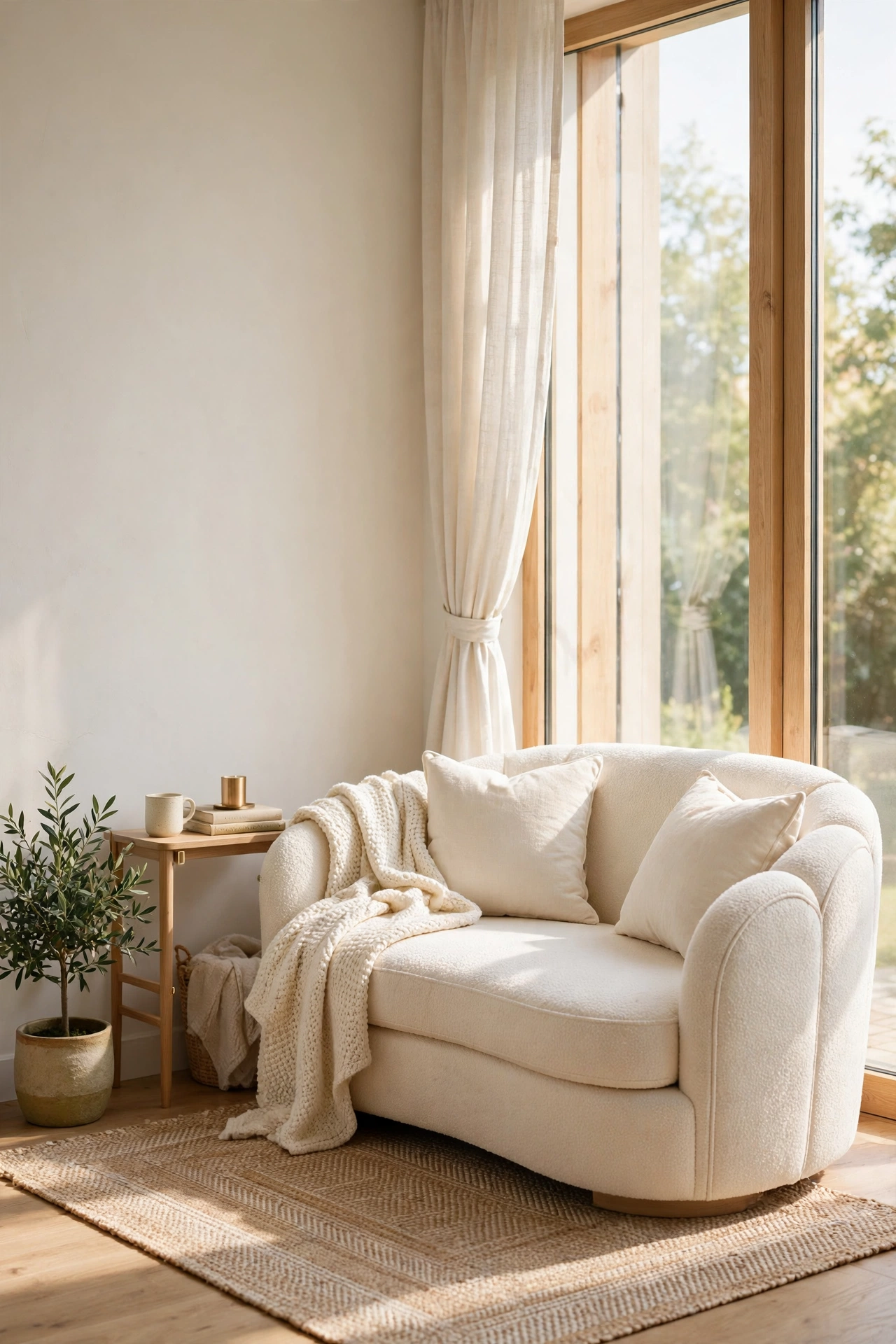
These small living room sofa ideas prove that a compact lounge can feel warm, stylish and welcoming when the main seat is chosen with care. A sofa often sets the size, colour and mood of a whole room, so a slim frame, a pale fabric and a clear walkway can make a tight space feel open rather than crowded. This guide gathers twenty five practical ideas that suit flats, studios and small family homes alike. Each idea focuses on one clear change, so you can start with whatever fits your room, your budget and your daily routine today. You will find shape choices, fabric guides, cushion plans and layout tricks, all chosen because they look good, cost little to try and are easy to reverse. Pick one idea, try it this weekend, and watch your lounge feel brighter, tidier and far more personal.
1. Curved Back Loveseat Pick
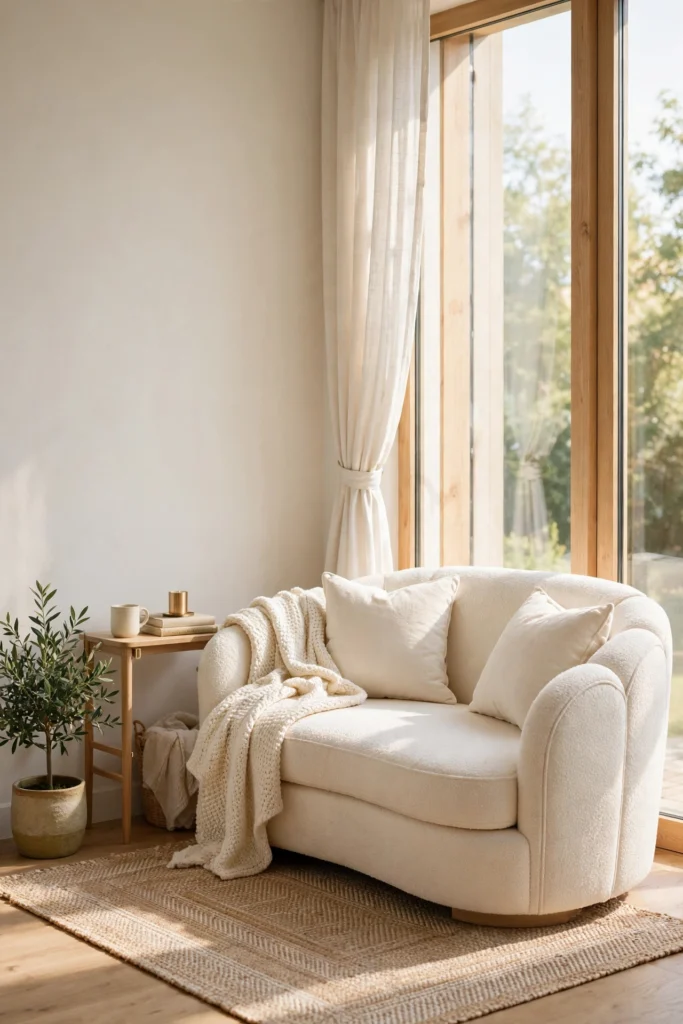
A curved back softens a boxy room at once, because the gentle line breaks up straight walls and square tables. Choose a loveseat with a slim frame and a low back, so it fits a short wall without blocking light from the window behind it.
Pair the loveseat with one slim side table and a pale cushion or two, keeping the rest of the room simple. The curve becomes a quiet focal point, and the lounge feels softer, friendlier and easier to sit in every day.
2. Narrow Track Arm Sofa
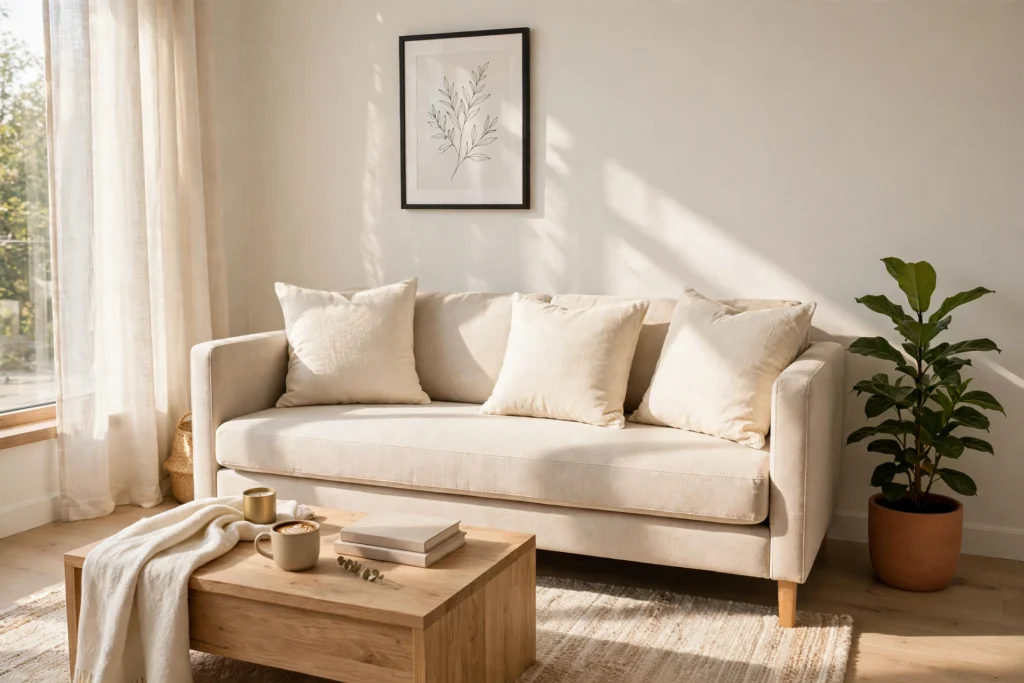
A narrow track arm saves precious inches on each side of a sofa.
- Measure the wall first and leave room for a side table.
- Choose arms no wider than a hand span.
- Keep the seat depth shallow for a clear walkway.
- Match the sofa length to two thirds of the wall.
Step back from the doorway after placing the sofa, because a layout that reads as one calm line from the entrance usually works well every day.
3. Plush Chaise Sofa Corner
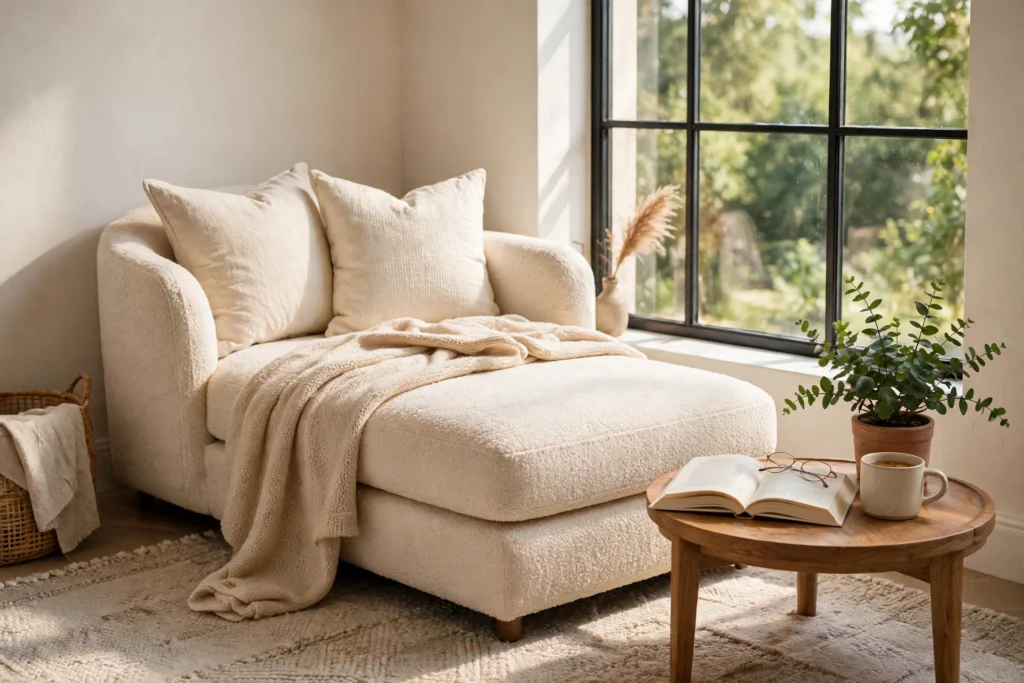
Quick Tip: Place the chaise end toward the window, so the long seat catches daylight for reading and resting without blocking the walkway.
A chaise sofa gives a small lounge a place to stretch out without a separate lounge chair. Keep the chaise depth slim and the fabric pale, so the long seat feels light rather than bulky. Add a small side table at the short end for a cup and a book, and the corner becomes the favourite seat in the house.
4. Rounded Corner Sectional Sofa
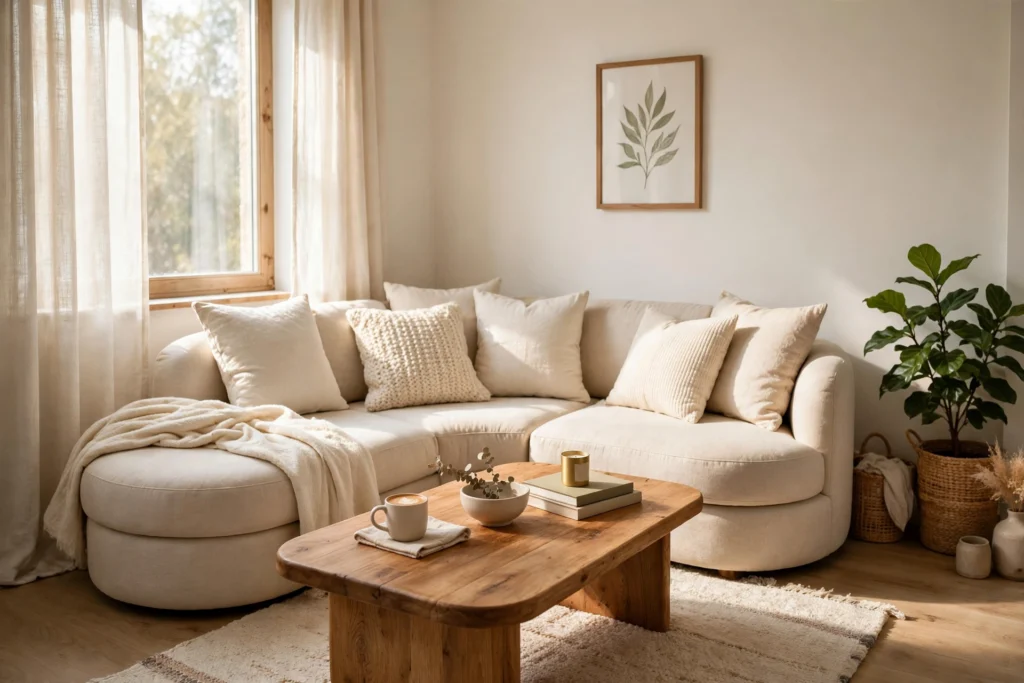
Before: a straight sofa that left a dead corner and pushed seating against one wall.
After: a rounded corner sectional that wraps the corner gently, so every seat faces the coffee table and the room feels gathered.
Choose a compact sectional with a short return, and keep the walkway behind it clear. A rounded shape suits a tight room well, because it softens corners that a square sectional would crowd.
5. Slim Daybed Sofa Style
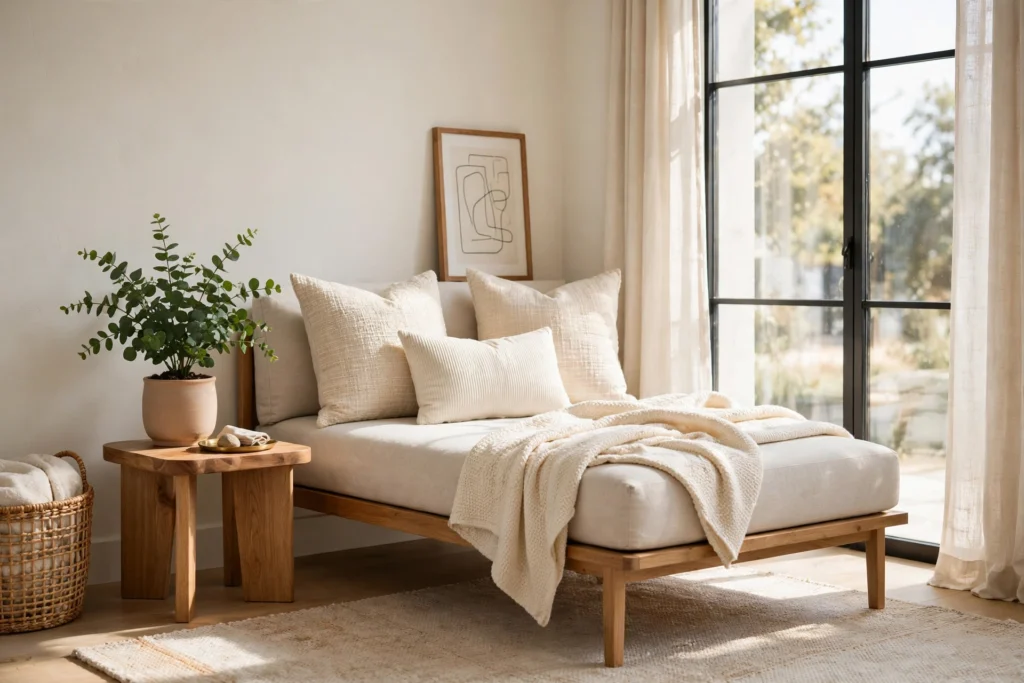
A slim daybed works as a sofa by day and a guest bed at night, which suits a small home perfectly.
- Choose a daybed frame with a slim back and arms.
- Dress it with a firm mattress and a pale cover.
- Add two large cushions along the back for sofa comfort.
- Fold a soft throw at one end for cool evenings.
- Keep bedding in a basket nearby for guests.
Test the seat height before buying, since a daybed that sits too low feels awkward for daily sitting.
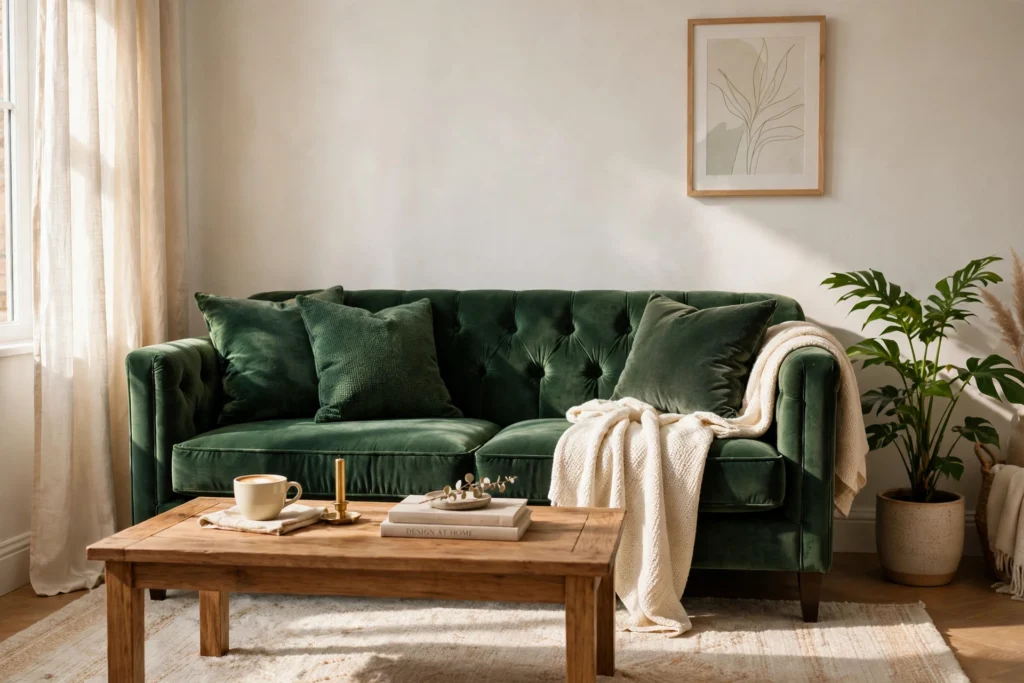
6. Tufted Velvet Sofa Look
| Sofa choice | Tufted velvet sofa | Plain linen sofa |
|---|---|---|
| Room feel | Rich and elegant | Light and relaxed |
| Best colour | Deep green or rust | Cream or pale grey |
| Care level | Brush weekly | Wash covers often |
Keep the rest of the room pale when the sofa is velvet, so the rich fabric holds the focus without darkening the space. One velvet sofa usually lifts a whole neutral room, because the eye gains a soft, textured centre.
7. Linen Slipcovered Sofa Refresh
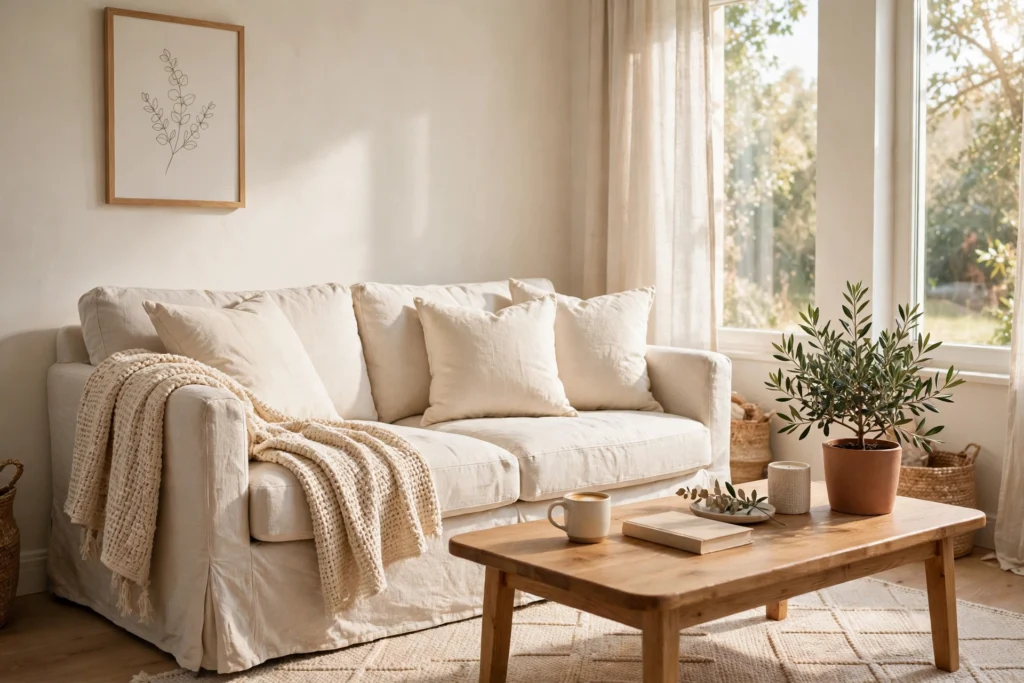
A linen slipcover gives a tired sofa a second life for a fraction of replacement cost, and it washes easily when daily life leaves its mark.
Do: Choose a washable linen blend in a pale neutral shade, and measure arms, back and seat depth before ordering.
Do: Tuck extra fabric into seat creases for a neat tailored finish, then add two cushions in a contrasting tone.
Don’t: Pick a loose cover that wrinkles constantly, or a dark shade that dulls daylight.
Don’t: Hide the sofa under heavy throws that trap dust and heat.
Wash the cover regularly, so the sofa stays fresh through daily use.
8. Leather Accent Sofa Pairing
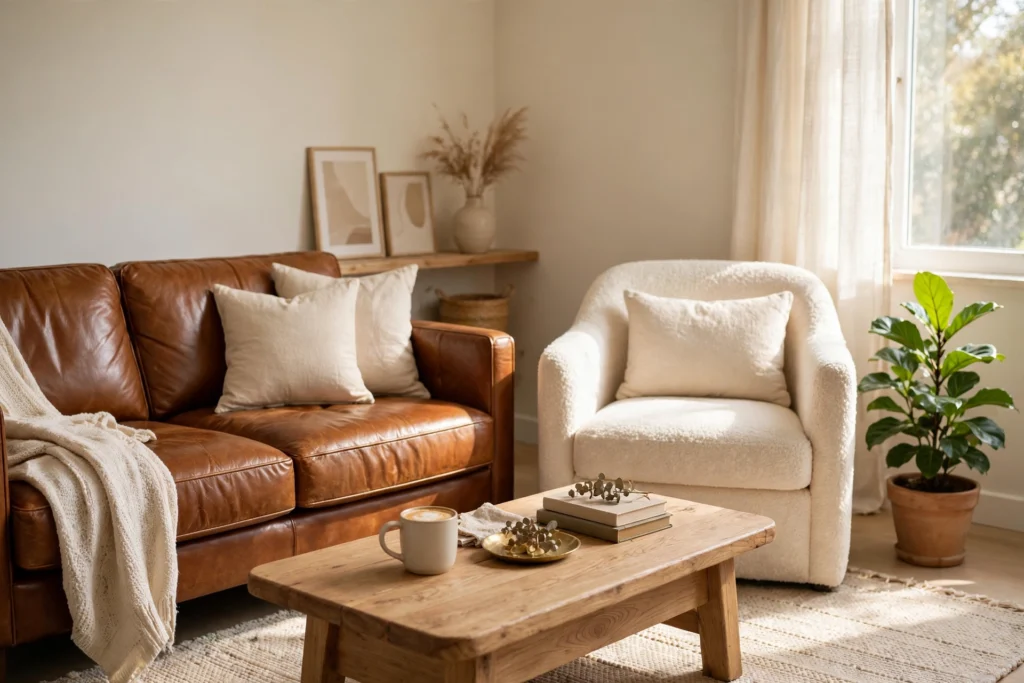
Quick Facts: A leather accent sofa adds warmth and age well; a fabric chair beside it softens the look; a pale rug keeps the pairing light.
Pair a compact leather sofa with a fabric chair in a pale tone, so the room gains texture without feeling heavy. Keep the leather tone warm rather than very dark, and add cream cushions to link the two seats. The pairing feels grown up and calm, and both pieces move easily when the layout changes.
9. Bold Colour Sofa Statement
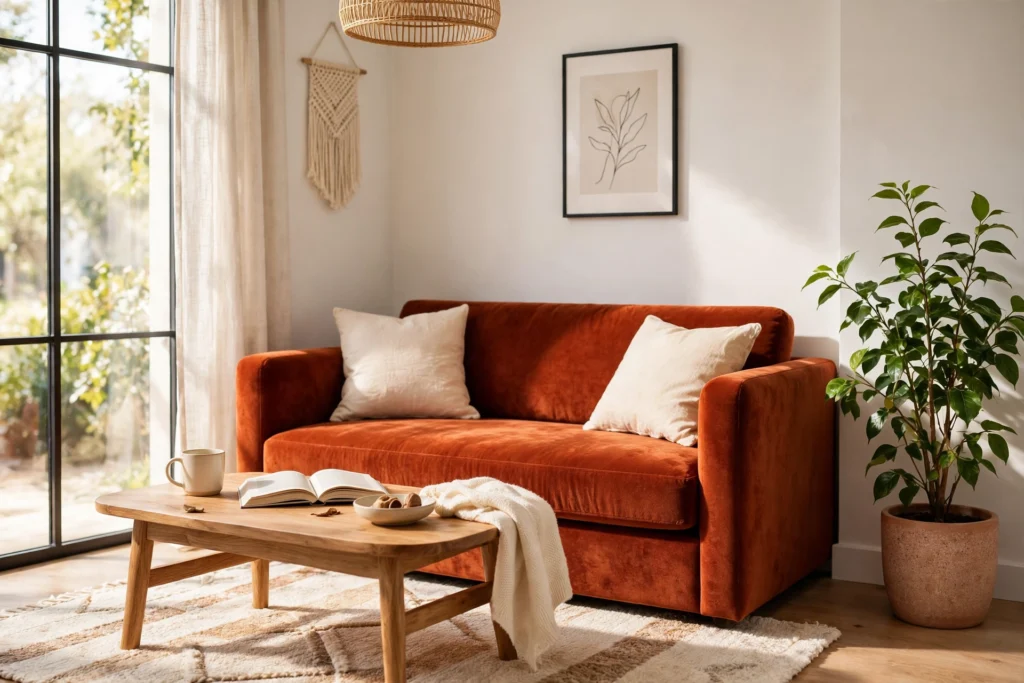
A bold sofa colour turns a plain room into a memorable one, provided the rest of the palette stays calm. Choose one strong tone, such as rust, deep green or navy, and keep walls, rug and curtains pale so the sofa can carry the colour alone.
Add two cream cushions and one patterned cushion in a matching tone, then step back from the doorway to check the balance. One strong sofa usually beats a whole bold room in a compact space.
10. Patterned Sofa Cushion Styling
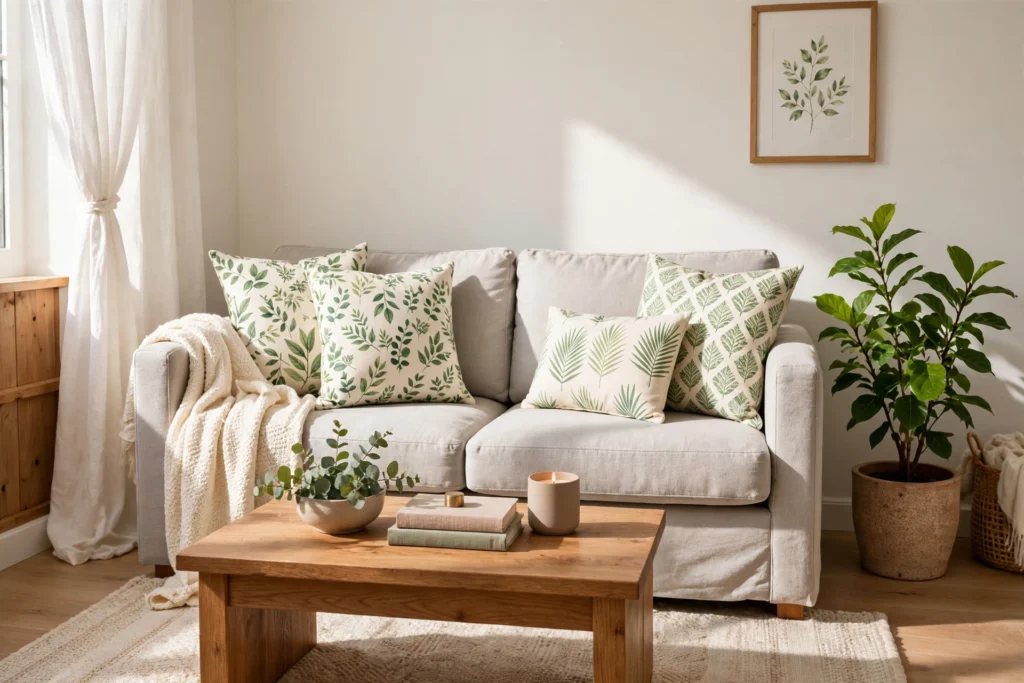
Cushion patterns add life to a plain sofa without a new purchase.
- Start with two larger plain cushions at the back.
- Add one patterned cushion in front for focus.
- Keep patterns in one colour family for calm.
- Remove one cushion whenever the sofa looks crowded.
Choose prints that match the rug or art, so the sofa feels planned rather than random. A patterned cushion mix suits a small room well, because it adds interest without new furniture.
11. Low Back Sofa Silhouette
Quick Tip: Choose a sofa back lower than the window sill where possible, so daylight passes over the sofa instead of stopping behind it.
A low back keeps a small room feeling tall, because the eye travels past the sofa to the window and the wall beyond. Keep cushions slim and pale, and leave a small gap behind the sofa for air flow. The lounge feels open, even when the sofa fills most of one wall.
12. High Back Sofa Comfort
Before: a low sofa that left sitters feeling exposed in a draughty corner.
After: a high back sofa that wraps the seat gently, so the corner feels sheltered, warm and private.
Choose a high back with a slim frame, so comfort does not come with bulk. Pair it with a good lamp and a soft throw, and the seat becomes a reading spot as well as a social seat.
13. Corner L Shape Sofa
An L shape sofa uses a corner that a straight sofa would waste, and it seats more people in the same footprint.
- Measure both walls of the corner before ordering.
- Choose the shorter return for the tighter side.
- Keep the walkway in front fully clear.
- Place a slim coffee table in the centre.
- Add a floor lamp at the open end.
Test the layout at dusk, since a corner sofa can block light if the return runs too long.
14. Apartment Scale Sofa Fit
| Sofa size | Apartment scale sofa | Full size sofa |
|---|---|---|
| Room feel | Balanced and open | Crowded and tight |
| Walkway space | Clear on both sides | Blocked at one end |
| Best home | Flats and studios | Large family rooms |
Measure doorways, lifts and stair turns before ordering, since a sofa that cannot reach the room helps no one. An apartment scale frame usually measures under two metres, with a shallow seat and slim arms.
15. Modular Sofa Block Layout
Modular blocks stack into a sofa by day and separate into extra seats when guests arrive, which suits a small lounge perfectly.
Do: Choose blocks in a pale washable fabric, so stains wipe away quickly, and keep the stack beside the wall for easy reach.
Do: Pull blocks out for a film night, then push them back when the evening ends.
Don’t: Mix block sizes that leave uneven gaps, or choose a dark fabric that dulls daylight.
Don’t: Block the walkway with loose blocks overnight.
Flexible seating like this makes a small lounge feel adaptable rather than fixed.
16. Sofa Bed Guest Solution
Quick Facts: A sofa bed gives a small lounge a guest bed without a spare room; a simple mechanism matters more than a fancy frame; a tested mattress keeps guests comfortable.
Choose a sofa bed with a slim frame and a mattress you have tested, and keep bedding in a nearby basket. Fold the bed away each morning and return the cushions, so the lounge resets for daily life.
17. Pet Friendly Sofa Fabric
A pet friendly fabric saves a sofa from claws, fur and muddy paws, provided the weave stays tight and the colour stays practical. Choose a performance fabric in a mid tone, since very pale shades show every mark and very dark shades show every hair.
Keep a washable throw on the favourite seat, brush the sofa weekly, and vacuum cushions often. The sofa stays welcoming for pets and guests alike, without a constant cleaning battle.
18. Stain Resistant Sofa Cover
A stain resistant cover suits a family lounge, because spills wipe away before they set.
- Choose a cover made for the exact sofa model.
- Test the fabric with water on a hidden corner first.
- Blot spills at once, never rub them in.
- Wash the cover on a gentle cycle when needed.
Keep one spare cover in a basket, so a wash day never leaves the sofa bare. A practical cover lets a pale sofa survive daily life in a small home.
19. Sofa Throw Blanket Layering
Quick Tip: Drape one throw over a sofa arm only, with folds loose and uneven, so the lounge looks lived in rather than staged.
Layering throws adds warmth and colour in seconds, without a new purchase. Choose throws in one warm family, such as cream, rust and soft grey, so layers blend even when textures differ. Fold the second throw across a seat corner, and store spares in a basket so the room stays tidy.
20. Matching Sofa Pillow Arrangement
Before: cushions in random colours that made a small sofa look busy and unsettled.
After: matching cushions in cream and sage, arranged by size from large at the back to small at the front, so the sofa reads as calm and ordered.
Keep the total to three or five cushions, and remove one whenever the seat feels crowded. A matching set suits a small sofa well, because the eye rests instead of darting.
21. Contrasting Sofa Cushion Palette
A contrasting palette adds energy to a pale sofa, provided the two tones share a similar depth.
- Pick a main cushion colour that matches the rug.
- Add a contrasting tone for two smaller cushions.
- Place the contrast cushions at the outer corners.
- Add one plain cushion in the centre to rest the eye.
- Step back and check the mix from the doorway.
Contrast works best in small doses, so keep the bold tone to a third of the cushions at most.
22. Sofa Side Table Pairing
| Side table choice | Slim side table | Bulky end cabinet |
|---|---|---|
| Room feel | Light and open | Heavy and closed |
| Best spot | Tight sofa ends | Spacious lounge ends |
| Storage use | One book and a cup | Drawers and clutter |
Place a slim side table within arm reach of the favourite seat, and keep the top mostly clear with one lamp or a small book stack. A good pairing makes the sofa usable, because cups, books and lamps all gain a place.
23. Window Facing Sofa Placement
A sofa facing the window suits a room with a good view, because daylight becomes the main decoration.
Do: Place the sofa with its back to the room and its front to the glass, keeping a clear walkway behind it.
Do: Add sheer panels to soften glare without blocking light.
Don’t: Push the sofa so close to the glass that curtains cannot move.
Don’t: Block the radiator or the window handle with the sofa back.
Step back from the doorway to check the view, since a window facing seat should frame the outside, not just the glass.
24. Fireplace Facing Sofa Arrangement
Quick Facts: A sofa facing a fire needs a safe distance from heat; a slim coffee table between sofa and hearth keeps the walkway clear; dim lamps suit evening firelight.
Place the sofa opposite the fire at a comfortable distance, leaving a clear walkway on at least one side. Add a slim coffee table between sofa and hearth, and dim the ceiling light so the fire glow carries the room.
25. Weekly Sofa Care Routine
A weekly routine keeps a small sofa looking fresh without a long cleaning session, and it starts with cushions alone. Fluff cushions, fold throws neatly, vacuum the seat and back in slow rows, and wipe the frame with a soft cloth.
Brush fabric weekly, rotate cushions so wear stays even, and check the legs and frame for wobble once a month. A short routine like this stops wear from building up, so the sofa stays easy to use and pleasant to sit on every day.
Conclusion
These small living room sofa ideas show that comfort and style grow from thoughtful choices, not from big spending or a larger floor plan. Start with one idea that suits your room, test it for a week, and keep what truly works for your daily life. Small rooms reward patience, since each slim frame, soft fabric or careful layout builds on the last. Save this guide for your next weekend refresh, share it with a friend who loves small space decorating, and try one more idea whenever your room needs a lift. Your lounge can feel warm, personal and welcoming, all without crowding the floor or blocking daylight.