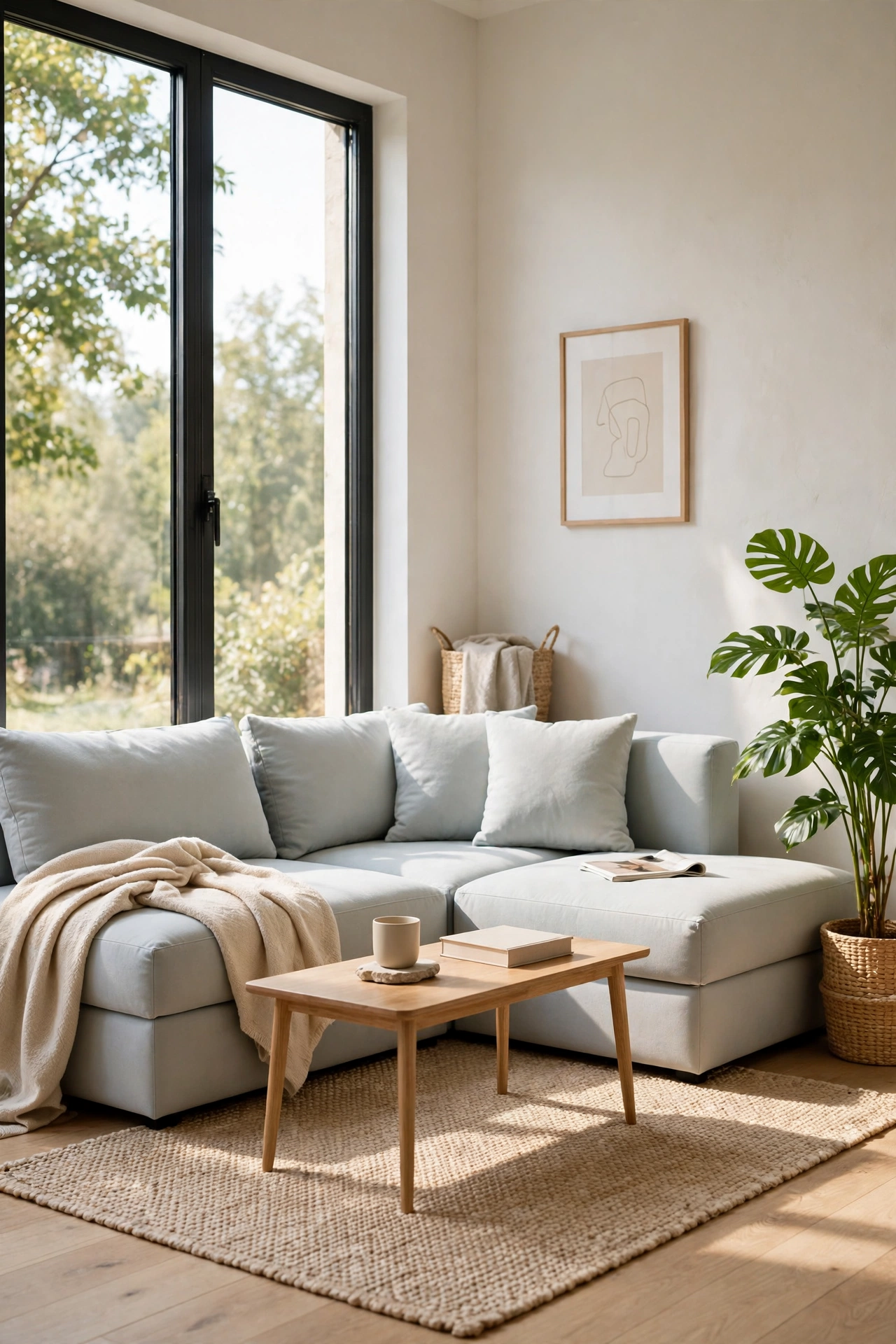
A flexible seating plan can change how a compact room feels, and these modular sectional small living room ideas show how movable pieces can anchor a whole layout without crowding the floor. The right arrangement gives comfortable seating for family and guests, leaves space for a coffee table and a lamp, and still lets the room breathe. In this guide there are twenty one practical ways to arrange, style and care for a sectional, from corner plans and storage pieces to colour blends, lighting layers and guest setups. Each idea works in a real home, with simple steps that can be copied in a weekend. Save the favourites and try one at a time until the room feels just right.
1. Two Piece Sectional Starter Set
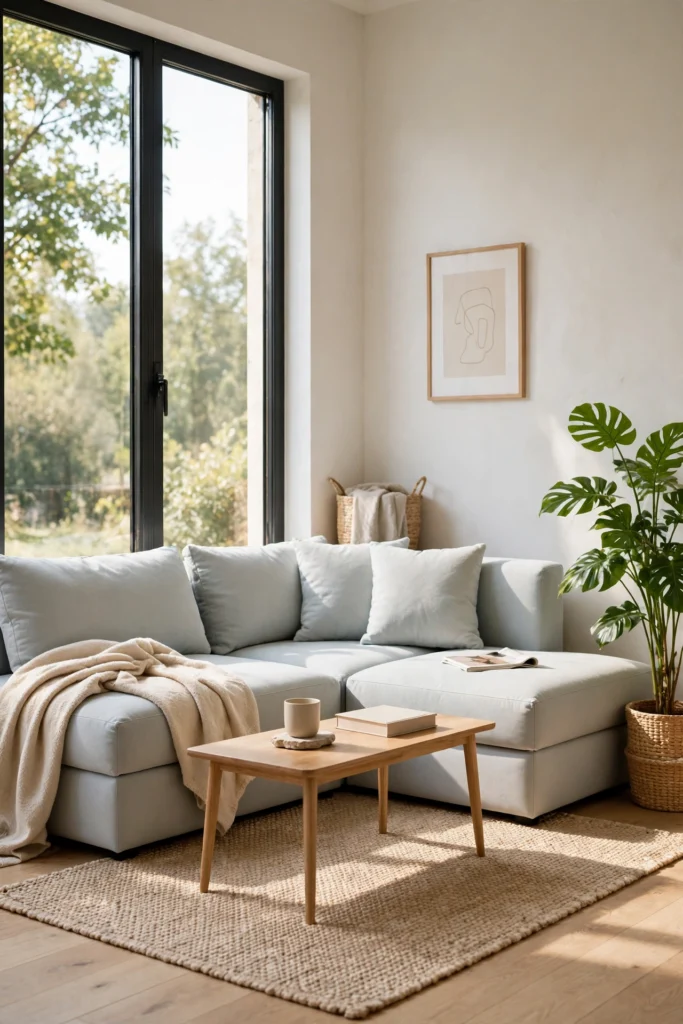
A two piece set is the simplest way to start with modular seating, because two blocks can form a sofa, a corner, or two separate chairs. Choose blocks with the same fabric and leg style, so the pair reads as one planned set rather than two random seats.
Keep the total length under two metres for a compact wall, and leave a clear walkway at one end. A small starter set also costs less than a large fixed sofa, and extra blocks can be added later when space or budget allows.
2. Chaise Left Corner Arrangement
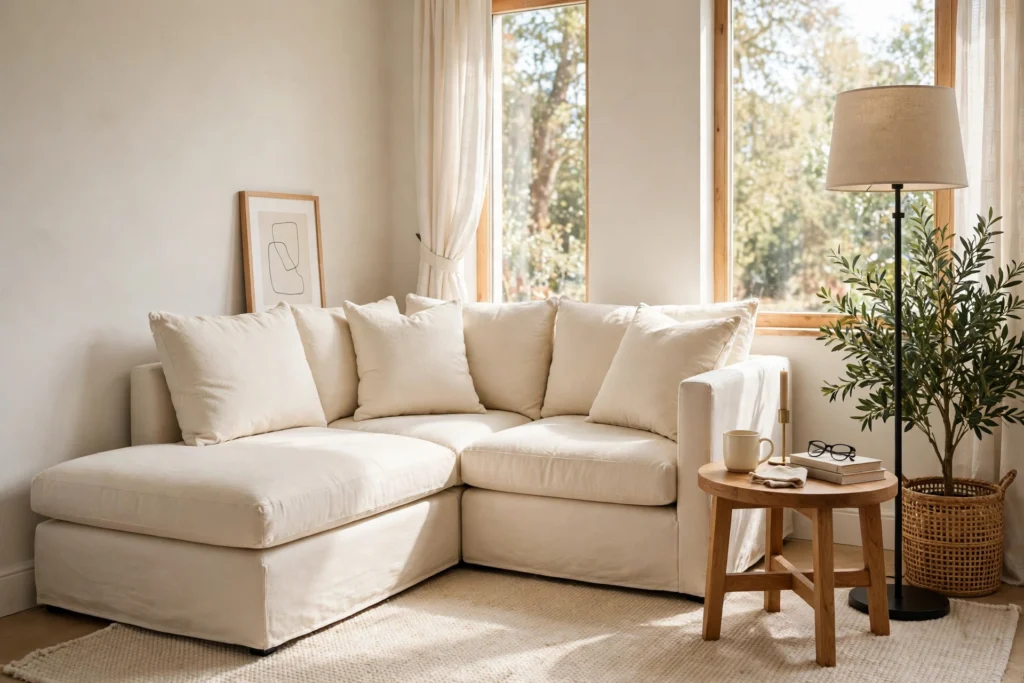
A chaise on the left side suits a room where the door or window sits on the right, because the long seat stays clear of the main traffic path.
- Place the chaise against the longer wall first.
- Keep the short return clear of radiators and doors.
- Add a floor lamp behind the chaise end for reading.
- Use a slim coffee table that both seats can reach.
Step back from the doorway after placing the blocks, since a layout that reads as one calm line from the entrance usually works well every day.
3. Armless Module Window Row
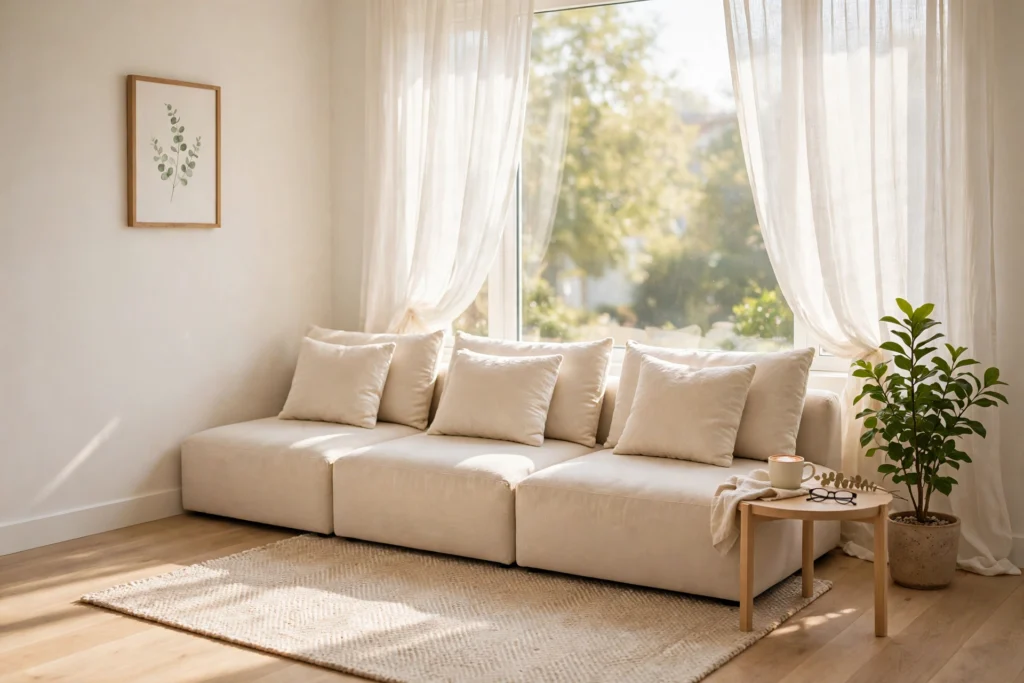
Quick Tip: Place the armless row with its back to the room and its front to the glass, so daylight becomes the main decoration and the view stays open.
Armless blocks suit a window wall well, because slim sides do not block light or the view. Keep cushions pale and low, and add sheer panels to soften glare without darkening the room. A small side table at one end holds a book or a cup, and the window row becomes a favourite resting place.
4. Ottoman Centre Sectional Group
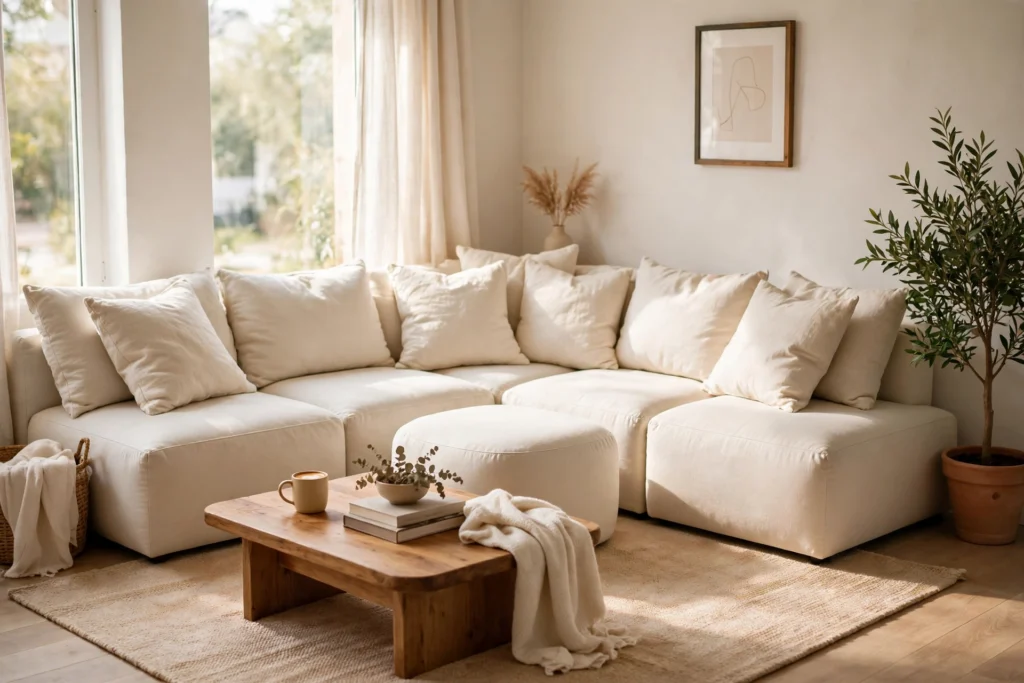
Before: separate blocks pushed against different walls, leaving the centre of the room empty and unused.
After: the same blocks grouped around a central ottoman, so every seat faces inward and the room feels gathered for conversation.
Choose an ottoman with a firm top that can serve as a footrest or a tray table. Keep the walkway around the group clear, and the centre grouping suits a square room well.
5. Reversible Chaise Swap Plan
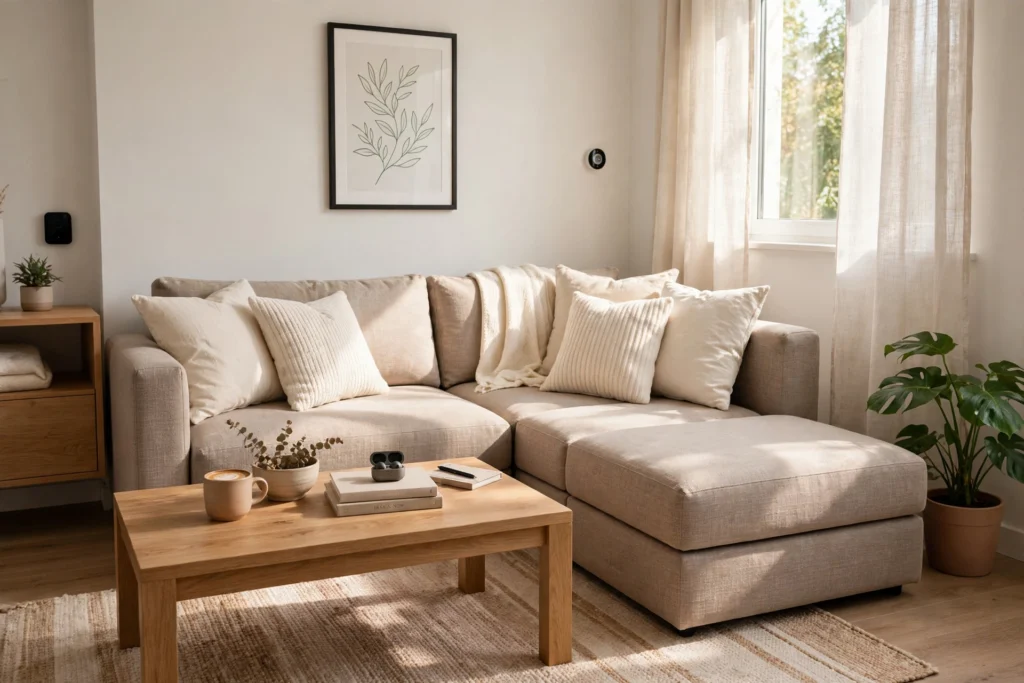
A reversible chaise can move from left to right in minutes, which suits a room that changes with the seasons or with new furniture.
- Lift the chaise block clear of the main row.
- Slide the main row to the opposite side of the wall.
- Reattach the chaise at the new end.
- Move the side table and lamp to match.
- Check the walkway before sitting down.
Test the swapped layout for a full evening, since a chaise that looks right in daylight can block a lamp or a door after dark.
6. Slim Module Hallway Fit
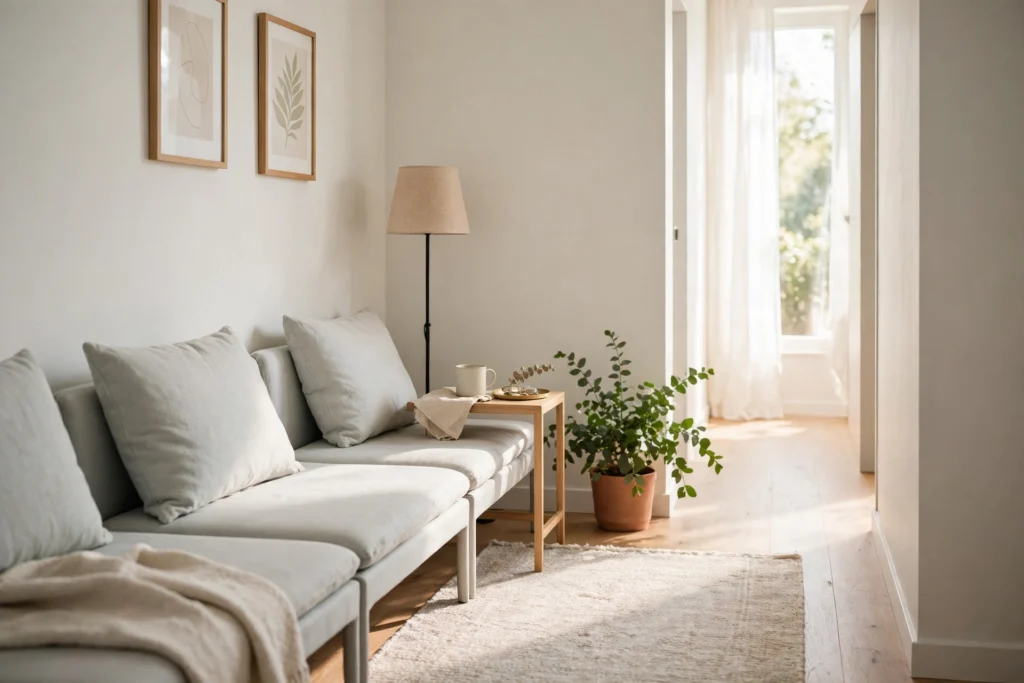
| Block choice | Slim module | Deep module |
|---|---|---|
| Room feel | Balanced and open | Crowded and tight |
| Walkway space | Clear on both sides | Blocked at one end |
| Best home | Flats and studios | Large family rooms |
Measure the hallway wall, doorways and stair turns before ordering, since a block that cannot reach the room helps no one. A slim module usually measures under ninety centimetres wide, with a shallow seat and slim arms.
7. Corner Module Reading Zone
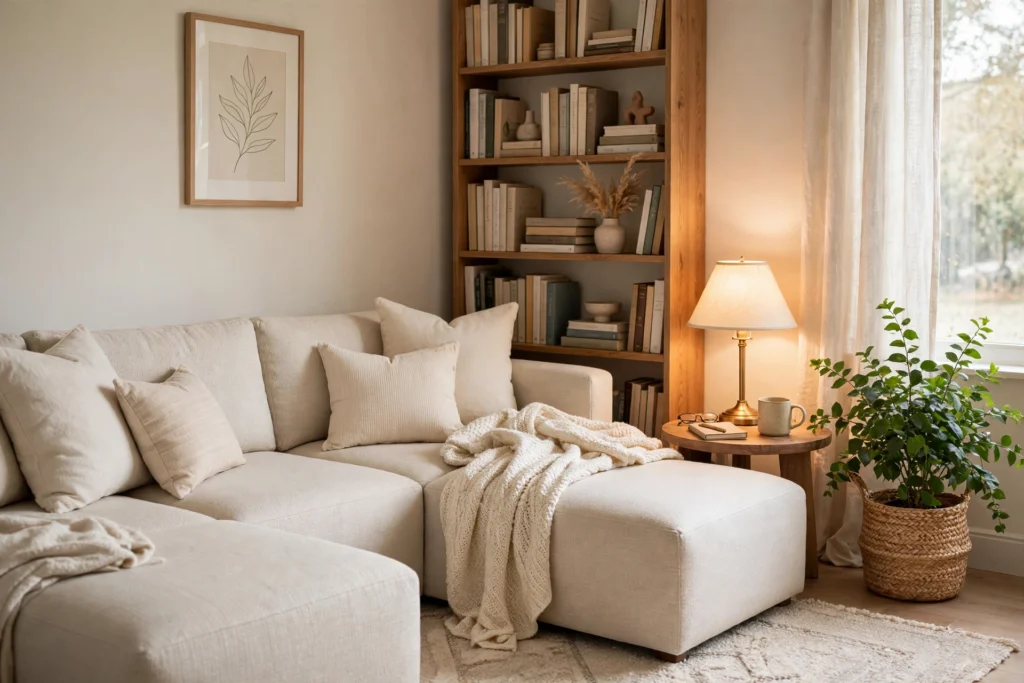
A corner reading zone turns a quiet angle into the best seat in the house, and modular blocks make the corner easy to shape.
Do: Place one block in the corner and one beside it, so the seat wraps gently around the reader.
Do: Add a warm lamp and a small side table within arm reach for a book and a cup.
Do: Keep a soft throw folded on the corner block for cool evenings.
Don’t: Push the blocks so tight into the corner that cushions cannot be fluffed.
Don’t: Block the bookshelf with a tall block that hides the lower shelves.
A reading zone like this rewards daily use without taking over the whole room.
8. Sectional With Hidden Storage
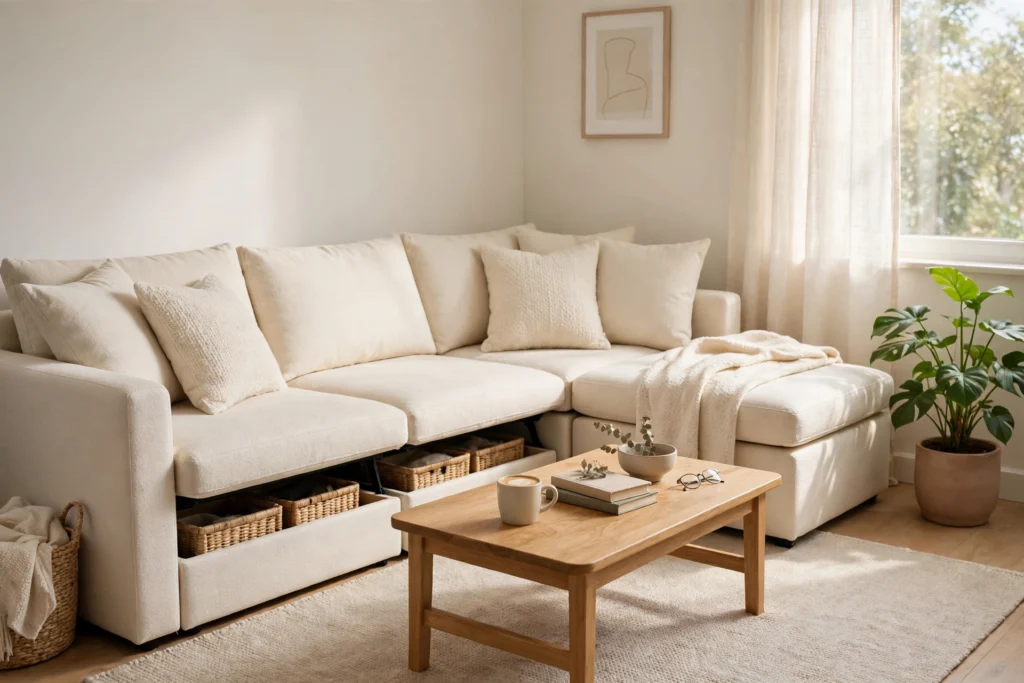
Quick Facts: A storage block hides blankets, chargers and magazines in one move; a lift up seat keeps items easy to reach; a tidy base keeps the room calm.
Choose storage blocks with a smooth lift mechanism and a sturdy base, and keep everyday items inside so the top stays clear for sitting. Label nothing and stack neatly, since a storage seat works best when opening it feels effortless. The hidden space often removes the need for a bulky cabinet in a compact room.
9. Pale Linen Module Covers
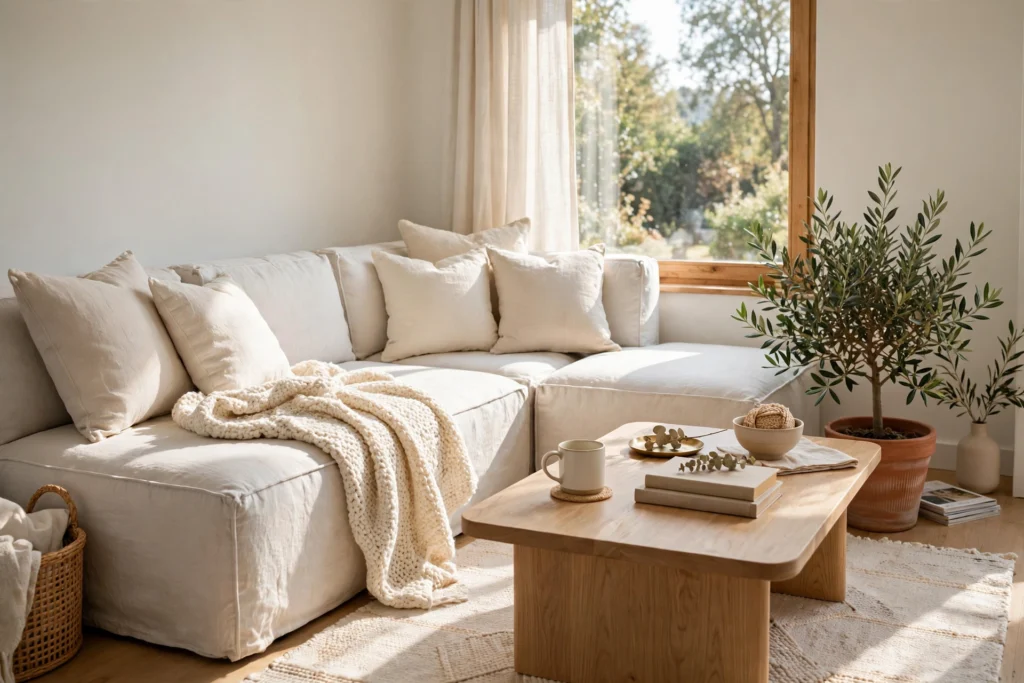
Pale linen covers give a sectional a fresh, relaxed look, and washable covers suit a busy home well. Choose a cotton linen blend with a little stretch, so each cover hugs its block neatly without sagging at the corners.
Wash covers on a gentle cycle and refit while slightly damp for the smoothest finish. Add cream or sage cushions on top for contrast, and the sectional will look freshly bought after every wash.
10. Sectional Rug Zone Layout
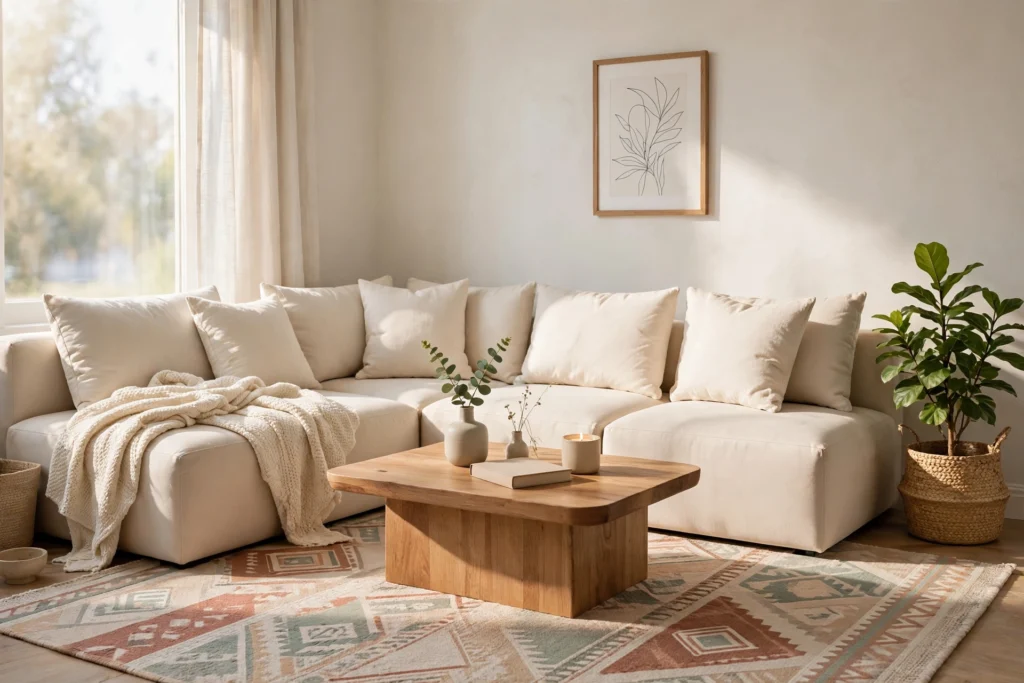
A large rug anchors modular blocks into one zone, because the rug links seat, table and floor into a single inviting group.
- Choose a rug that slides under the front feet of every block.
- Extend the rug past the coffee table on all sides.
- Pick one rug colour to repeat in the cushions.
- Keep the rug pile low so blocks slide easily.
A rug that is too small shrinks the room visually, so measure the full seating footprint before buying.
11. Module Guest Sleep Setup
Quick Tip: Keep bedding in a basket beside the sectional, so a guest bed can be made in minutes without hunting through cupboards.
Push two blocks together to form a flat sleeping surface, add a firm topper, and dress the bed with a pale sheet and a soft throw. Fold the setup away each morning and return the cushions, so the lounge resets for daily life. A guest setup like this suits a small home without a spare room.
12. Sectional Against Short Wall
Before: a long sofa that overran a short wall and blocked the doorway beside it.
After: a compact sectional that fits the short wall exactly, leaving the doorway clear and the room balanced.
Measure the wall twice, including skirting boards and sockets, and choose blocks that total slightly less than the wall length. A small gap at each end keeps the layout feeling intentional rather than squeezed.
13. Curved Module Family Circle
A curved arrangement suits family evenings, because every seat faces the centre and conversation flows easily.
- Place the corner block first to set the curve.
- Add armless blocks on each side at a gentle angle.
- Set a round coffee table in the centre.
- Leave a clear gap behind one end for entry.
- Add a floor lamp at the open side.
Keep the curve gentle rather than tight, since a wide arc feels welcoming while a closed circle can crowd a small room.
14. Sectional Pillow Mix Guide
| Pillow plan | Plain base pillows | Patterned accent pillows |
|---|---|---|
| Room feel | Calm and ordered | Lively and layered |
| Best count | Three large pillows | Two small pillows |
| Colour rule | Match the sectional | Match the rug or art |
Start with plain pillows at the back and add patterned pillows in front, keeping patterns in one colour family for calm. Remove one pillow whenever the seat looks crowded, since a sectional needs sitting space more than display space.
15. Module Pet Proof Fabric
A pet proof fabric saves a sectional from claws, fur and muddy paws, provided the weave stays tight and the colour stays practical.
Do: Choose a performance fabric in a mid tone, since very pale shades show every mark and very dark shades show every hair.
Do: Keep a washable throw on the favourite block and brush the fabric weekly.
Don’t: Pick a loose weave that snags easily, or a delicate velvet for a high traffic pet seat.
Don’t: Let mud dry on the fabric, since fresh marks lift far more easily.
Vacuum cushions often, and the sectional stays welcoming for pets and guests alike.
16. Sectional Lighting Layer Plan
Quick Facts: Layered light flatters a sectional after dark; a floor lamp suits reading, a table lamp suits conversation, and dim light suits winding down.
Place a floor lamp at one end of the sectional and a table lamp at the other, keeping both at similar heights so light pools evenly. Dim the ceiling light in the evening, so the lamps carry the room and the sectional becomes a restful spot.
17. Two Tone Module Colour Scheme
Two tone colour keeps a sectional interesting without a bold overhaul, because one calm base plus one accent tone reads as planned rather than random. Choose a pale base for most blocks and a deeper tone for one corner block or the chaise.
Repeat the accent tone in one cushion and one small decor piece, such as a vase or a throw, so the scheme ties together. Keep walls pale, and the two tone sectional becomes the quiet focal point of the room.
18. Sectional TV Viewing Angle
A good viewing angle matters more than a large screen, because a strained neck ruins even the best film night.
- Angle the main row slightly toward the screen.
- Keep the screen at eye level from a seated position.
- Leave a clear path between sectional and console.
- Add a slim side table for remotes and drinks.
Check the angle from every block before fixing the layout, since a corner block can sit too far sideways for comfortable viewing.
19. Module Balcony Door Clearance
Quick Tip: Leave at least one full step of clear floor in front of a balcony door, so the door opens fully and daylight flows in without a blocked path.
Place the sectional with its back to the room and its short end toward the door wall, rather than across the doorway. Add sheer curtains that slide fully clear of the glass, and keep plants and tables away from the swing of the door. The room stays bright and easy to move through.
20. Sectional Seasonal Cushion Rotation
Before: the same cushions all year, making the sectional look tired by winter.
After: a seasonal rotation, with warm rust and mustard in autumn, pale linen in summer, and soft knits in winter, so the seat feels fresh every few months.
Store one cushion set in a breathable bag and bring out the next set in under ten minutes. Keep one plain cushion constant through every season, so the sectional always has a calm anchor.
21. Sectional Weekly Tidy Habit
A weekly tidy habit keeps a sectional looking fresh without a long cleaning session, and it starts with cushions alone.
- Fluff every cushion and rotate blocks where possible.
- Fold throws neatly and return remotes to one tray.
- Vacuum seats and backs in slow rows.
- Wipe block legs and frames with a soft cloth.
- Check connectors between blocks for a firm join.
Brush fabric weekly and check legs once a month, so wear never builds up and the sectional stays easy to use every day.
Conclusion
A sectional proves that small rooms do not need small comfort, and these modular sectional small living room ideas give twenty one ways to make flexible seating feel generous, stylish and truly personal. Start with placement, choose a fabric that suits daily life, then layer cushions, light and rugs until the corner feels complete. Pin the favourite ideas, try one change this weekend and share the result with a friend who loves cozy rooms too. A small lounge is ready to become the most loved spot in the home, one thoughtful detail at a time, and a well chosen sectional will reward daily use for years to come.